Click play to listen to this article
During my stay at inpatient rehab, I asked my therapists what I could do in my room for those long stretches of time when I wasn’t participating in occupational or physical therapy.
They recommended some exercises I expected, like squeezing clay putty to improve my finger strength or spelling out the alphabet with my stroke-affected foot to try and regain some movement patterns.
However, they also suggested I try a series of audio recordings from SaeboMind that help you visualize various actions you could easily do before the stroke.
Some examples include walking up a flight of stairs, opening a soda can, writing a letter, and driving a car.
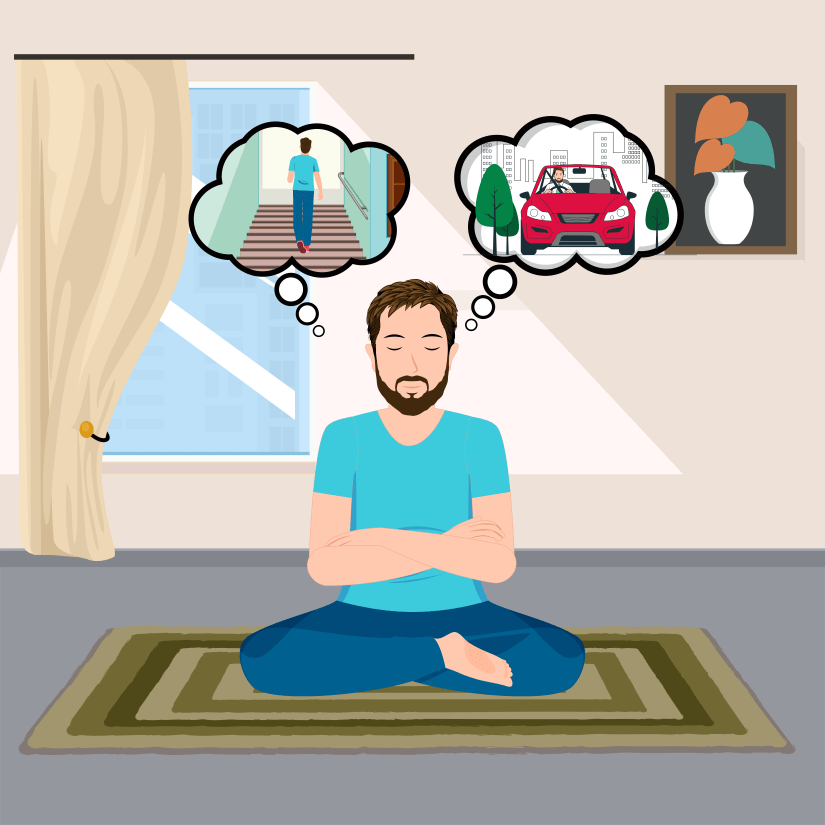
In the weeks that followed, I listened to these recordings in the rehab facility almost every day, and when I returned home, I often found myself bouncing back to this practice.
My First Experience With Visualization Techniques
I had trouble sleeping in the rehab center, so many nights I would lay in bed listening to these audio recordings of someone telling me to imagine the feeling of carpet under my feet or to picture myself walking up a staircase.
The next day I would often joke with the therapists about how the narrators on these recordings were liars!
During my therapy sessions, I still clung to the stairway handrail with both hands as I slowly moved my feet up and down the stairs.
Although the visualization exercises didn’t produce the immediate benefit I had hoped for, I still found mental practice to be helpful in the years after stroke.
These visualization exercises, such as those from Saebomind, have provided an easy opportunity to mentally rehearse various activities. As I started to do more and more in the months and years after stroke, they certainly helped me to feel more comfortable in public settings.
How Mental Practice Helps Stroke Survivors
Research has shown that mental training can be an effective complement to real-world practice for stroke survivors looking to improve their post-stroke abilities.
Studies also indicate that mental practice can speed up the learning curve for those looking to improve in tasks or activities that they currently can or previously could do.
However, visualization is not a replacement for physical therapy and real-world practice. It’s also not ideal for learning new skills.
In his book “Stronger After Stroke,” Peter Levine describes how mental practice stimulates the same areas of the brain that are in use when you physically practice a skill.
“Mental practice has been shown to rewire the brain after stroke,” Levine writes. “Studies have shown that, in certain circumstances, mentally practicing something promotes as much neuroplastic change as actually practicing it!”
Mental practice has been shown to rewire the brain after stroke. Studies have shown that, in certain circumstances, mentally practicing something promotes as much neuroplastic change as actually practicing it!
Peter Levine
Using Mental Practice in Recovery After Stroke
When I started driving again, I revisited SaeboMind to use their mental practice scripts on driving.
While the immediate result was not a monumental improvement in my ability to drive without issues, I did feel more comfortable in the car. I had a better recollection of where certain controls were located, like the air conditioning or radio tuning.
In terms of physical benefits from mental practice, I’ve actually used a lot of visualization techniques in activities beyond stroke recovery.
For example, mentally rehearsing the steps for my wedding dance was a huge help, and it was something I certainly wouldn’t have been aware of if it weren’t for my experience with mental practice in stroke recovery.

With limited practice time during the weeks leading up to our wedding, I would watch a video recording of our routine or visualize the steps in my mind almost every day.
On the day of our wedding, we went through the routine nearly flawlessly and I don’t believe I could have done that without the mental practice sessions.
How Visualization May Ease Anxiety
In his book “With Winning in Mind,” Lanny Basham writes “Mental practice is a bargain and done correctly, it is powerfully effective.”
Bassham, an Olympic medalist in rifle shooting, recounts stories of coaching athletes who had trouble sleeping the night before competitions. He suggested they prepare for their upcoming event by visualizing the course and targets while they were lying wide awake in bed.
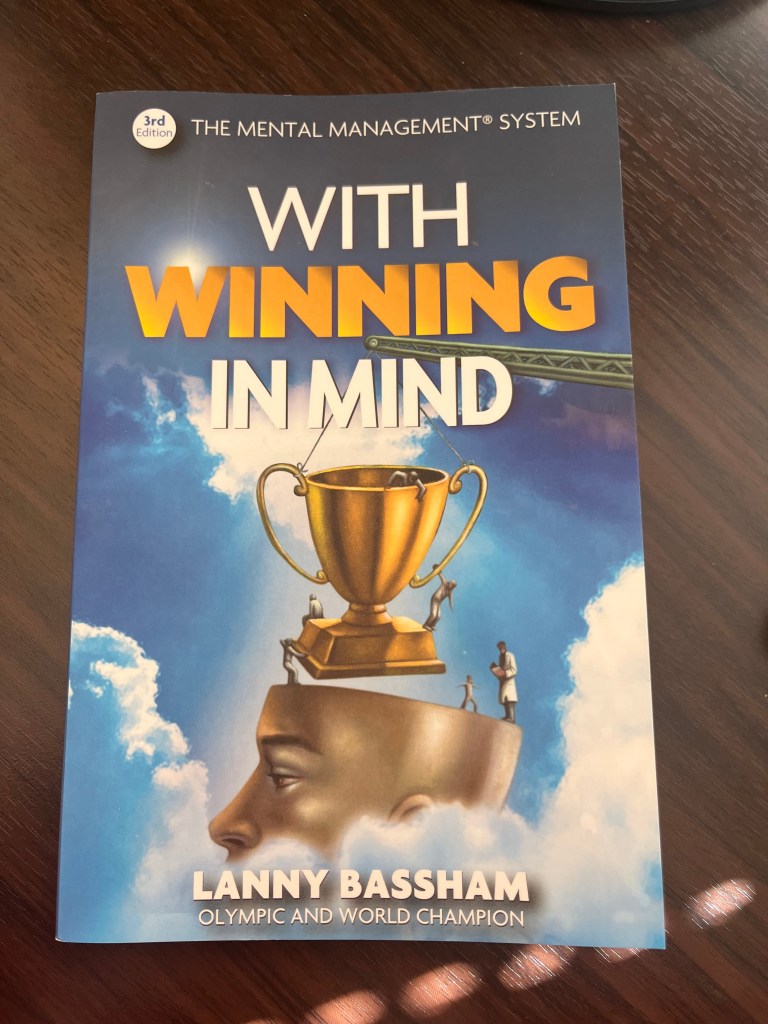
Since consistent sleep was a huge problem for me, I stole this advice from Bassham and it’s helped me to feel more comfortable in dealing with difficult situations after stroke.
On those nights when I couldn’t sleep, I would run through whatever tasks, trips, or activities I had planned for the next day.
This helped me considerably as I found myself really struggling with decision-making and impromptu situations after stroke.
Mentally rehearsing the night before or the day of has made me feel much more comfortable in preparing myself for whatever the day may bring.

4 Essential Stroke Recovery Strategies
Subscribe to the free monthly newsletter and I’ll send you a short article highlighting the four things I wish I’d started sooner after stroke.
How to Use Mental Practice for Stroke Recovery
One of the biggest benefits of visualization is its simplicity. It’s something you can do anywhere and anytime.
Here are three strategies that can help improve your mental practice sessions.
1) Be as Detailed as Possible
It’s recommended that mental practice sessions be as detailed as possible, including smells, sounds, and feelings.
In her book Healing & Happiness After Stroke, Kari Dahlgren writes, “The more descriptive you are in your visualizations, the more of your brain you will engage, and the more powerful your results will be.”
The more descriptive you are in your visualizations, the more of your brain you will engage, and the more powerful your results will be.
Kari Dahlgren
2) Timing Matters
Mental practice activities should also be similar to the amount of time it actually takes you to complete a task in real life.
For example, if walking up a set of stairs should take about 10-20 seconds, then each set of your mental practice of walking up the stairs should take the same amount of time.
3) Stay Positive
It’s also important to remain positive in these rehearsal practices. In his book, Lanny Bassham writes:
“Not only does positive imagery increase performance but when we think about creating error we improve the chance of error occurring as well. When we worry that bad things might happen to us we are actually rehearsing them. We are building new neural pathways toward failure.”
“Not only does positive imagery increase performance but when we think about creating error we improve the chance of error occurring as well. When we worry that bad things might happen to us we are actually rehearsing them. We are building new neural pathways toward failure.
Lanny Bassham
The Impact of Mental Practice on Recovery After Stroke
I’ve greatly enjoyed adding visualization practices into my post-stroke rehab work and it has provided a significant benefit in other activities like learning the steps of my wedding dance.
However, mental practice is not going to provide dramatic overnight improvements like I learned in the rehab center.
But with repeated practice, it has the potential to be an effective complement to physical therapy in gradually improving physical performance after stroke.
 Stroke Recovery Rehab