Click play to listen to this article
Shortly after returning home from in-patient rehab, my mom brought me some childhood games she had lying around, thinking they might help me relearn how to use my stroke-affected left hand.
The collection of board games included popular titles like Jenga and Dominoes, but the game that ended up being my favorite was one I wasn’t familiar with– Mancala.
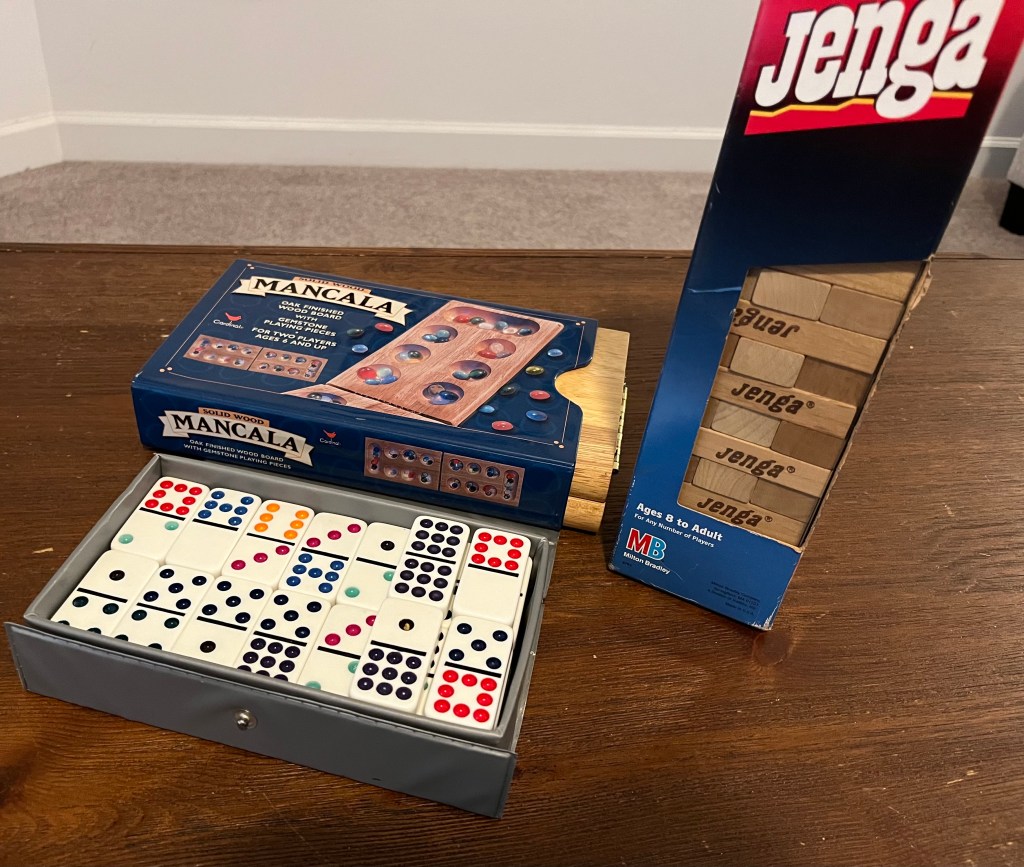
As children, we had been gifted Mancala, but apparently rarely played. The box was like-new and thankfully my mom held onto this for 20-plus years.
Mancala quickly became a favorite game of mine in the early weeks and months after stroke because it mimicked many of the hand exercises I worked on in therapy sessions.
To this day, just about everyone who has visited with us has had to play a round of Mancala with me.
What is Mancala?
Mancala is a simple two-player strategy game that involves moving gemstones around a board, collecting and capturing your opponent’s gemstones along the way.
The winner is the individual who collects the most gemstones at the end of play.
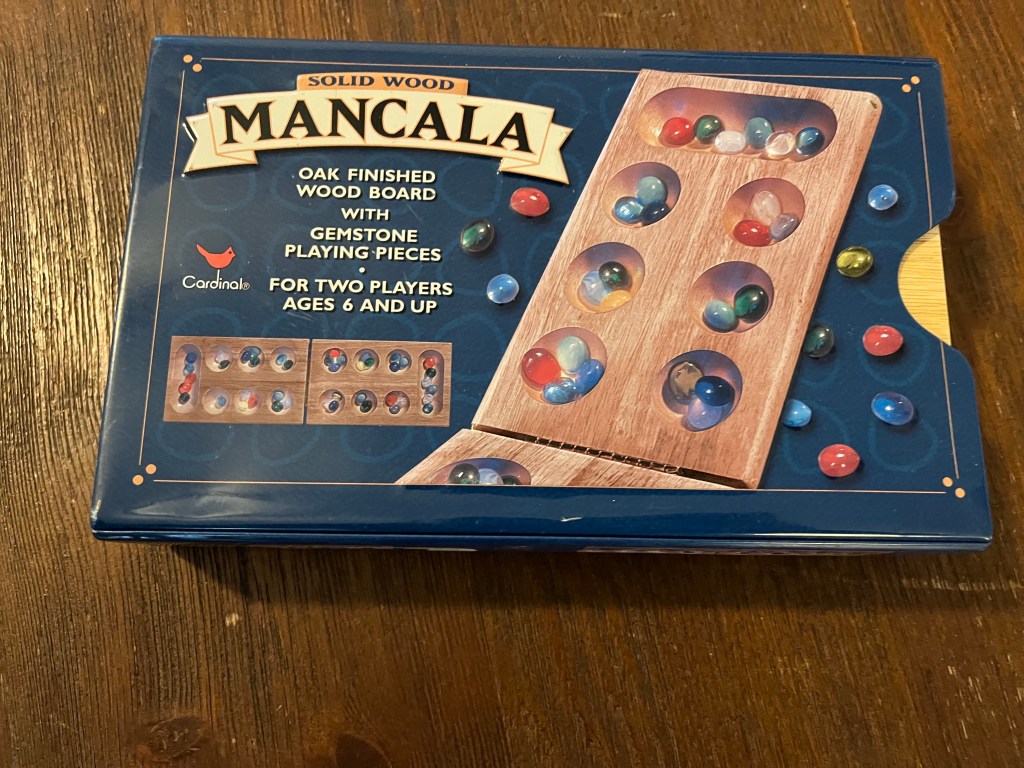
There are many variations on the exact rules for how to play Mancala. In fact, it’s one of the oldest strategy board games in the world, with references to the game dating back more than a thousand years.
How Mancala Helped Me in Stroke Recovery
I hated my experience in outpatient physical therapy.
It was so discouraging to be dropped off at the physical therapy center only to sit at a table playing with clothes pins, marbles, beads, and more for an hour while the physical therapists bounced around to their many other patients.
I enjoyed Mancala so much because picking up and moving the gemstones around the board was exactly what I was told to do in physical therapy. Only now, I could do the exact same thing in my living room while competing against someone else.
For example, one challenge in stroke recovery is learning how to move your fingers individually. Picking up and grabbing individual items becomes easier over time because all of your fingers are working in unison.
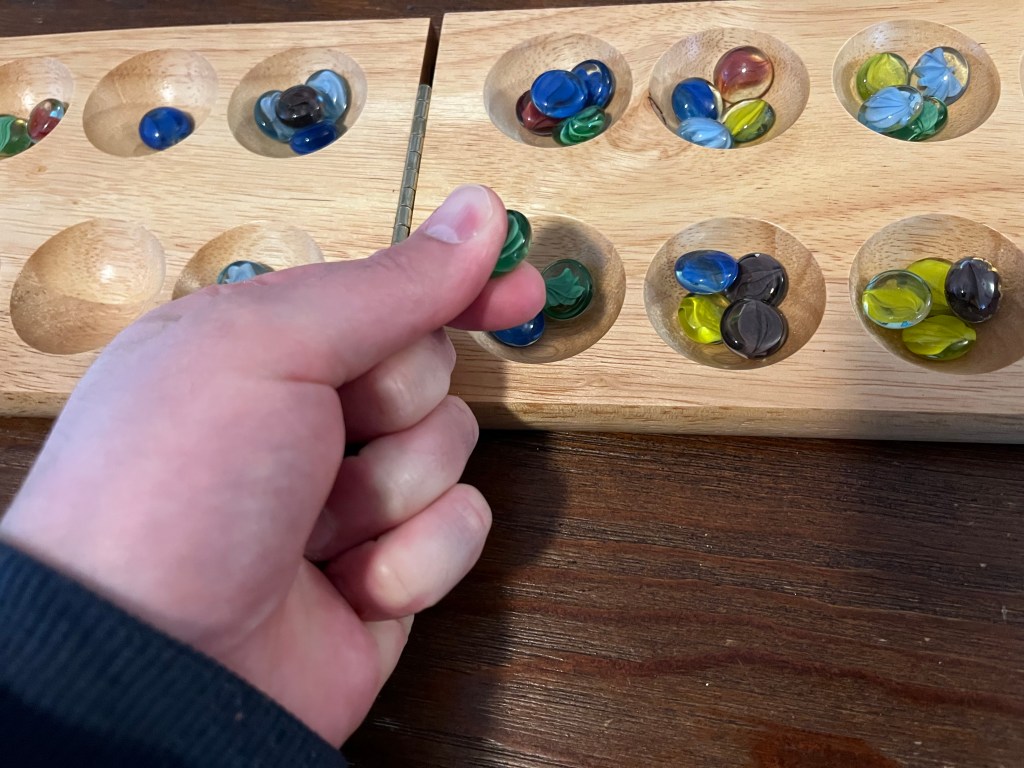
However, it’s a challenge to have your thumb and index finger pick up an item while your other three fingers hold onto something like a few gemstones. This simple physical therapy exercise is necessary in every move of Mancala.

4 Essential Stroke Recovery Strategies
Subscribe to the free monthly newsletter and I’ll send you a short article highlighting the four things I wish I’d started sooner after stroke.
How Board Games Can Help Stroke Survivors
All board games are a great opportunity to practice using your stroke-affected hand to perform unique tasks. Mancala just so happened to be my favorite.
I was always bored with the mundane rehab exercises that are taught in physical therapy.
You have to pick up the marbles and put them back down. Over and over again.
Board games, on the other hand, provide motivation to perform these mundane tasks with your affected hand and offer a great complement to traditional therapy exercises.
Motivation itself is a key component of neuroplasticity, the brain’s ability to change and learn new tasks.
In his book ‘The Brain That Changes Itself,’ Norman Doidge writes this of neuroplasticity: “The only requirement is that the person have enough of a reward, or punishment, to keep paying attention through what might otherwise be a boring training session.”
As long as you’re trying to win, board games like Mancala offer a great mix of motivation and physical therapy to challenge any stroke survivor.
 Stroke Recovery Rehab