Listen to this article
It was a strange phone call to consider making.
Just two months prior, I had been airlifted to John’s Hopkins University after having a hemorrhagic stroke in the middle of a workout at the gym.
Now, here I was thinking about calling my mom to tell her not to worry, but I was planning to go back to the emergency room after noticing some new stroke-like deficits.
My balance felt noticeably worse, and when I looked in the mirror, I could see a significant droop on the left side of my face – my stroke-affected side.
Was I having another stroke?
Setbacks in Stroke Recovery
At the hospital, I was treated for a mini-stroke, also known as a TIA or transient ischemic attack. Although medical imaging revealed that I didn’t have another stroke, I was later advised to visit a neurologist for an EEG (Electroencephalogram) to rule out any threats or impacts from seizures.
This was my first experience with a setback in recovery after stroke.
It had only been two months since my stroke, but at the time, I felt I was making great progress. I was excited for the months to come, looking forward to going back to work and getting a sense of normalcy back.
Instead, I was once again disappointed to be visiting various doctors and learning that recovery after stroke would be a rollercoaster, full of many ups and downs.
My Experience with Post-Stroke Recrudescence
When I visited the neurologist for an EEG to discuss my risk for seizures, I was told that the experience that took me back to the emergency room could have been a case of post-stroke recrudescence — the re-emergence of previous stroke-related deficits that usually resolve within a day or so.
Recrudescence can be caused by several factors, such as an infection, blood pressure issues, stress, or insomnia.
On the day I decided to head to the ER due to balance issues and facial drooping, I also felt significant numbness — like novocaine — on my left cheek. It was something that I hadn’t felt since I was initially admitted to the hospital two months prior, which was concerning.
Overall, it was a challenging and scary experience to think about the prospect of having another stroke. Thankfully, the facial droop and numbness receded by the next day, and my balance started to improve in the following days as well.
In my case, doctors advised me that this temporary return of post-stroke deficits may have been caused by pushing myself too hard, too soon.
In the days leading up to this incident, I had been more physically active than I had been since the stroke — taking longer walks and riding my bike for the first time.
It was also in the middle of the heat of summer, and I didn’t consider how that might affect me so soon after stroke.

Need More Stroke Recovery Resources?
New articles on stroke recovery are posted on the 1st of every month. Subscribe to the free newsletter to receive an email when new content is published.
Setbacks in Recovery After Stroke
Setbacks are unfortunately a common occurrence for stroke survivors. The cliché “Progress isn’t linear” certainly applies to recovery after stroke.
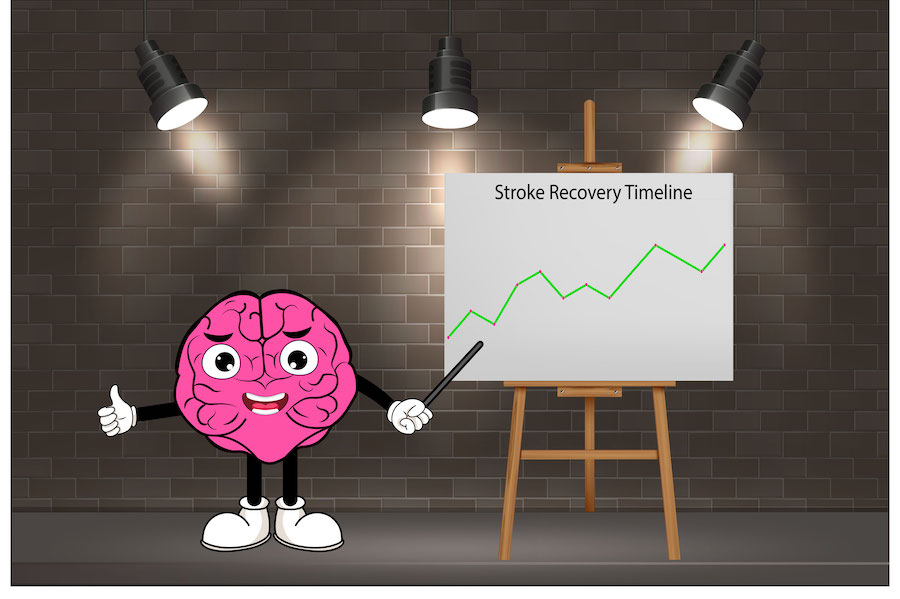
In the three years since my stroke, I’ve made the mistake of declaring to myself that “I’m back!” whether it be for my hobbies or work multiple times.
In moments where you’ve been feeling pretty good for days, it’s easy to think you’re so close to being the “old you,” that you’re past the hardest parts of recovery, and that it’s all smooth sailing from here on out.
But then, various life circumstances can remind you of the deficits you still need to work through.
For example, there were times when a bout with COVID, a stressful week at work, or a busy stretch of personal obligations left me feeling like I was no better than I was in the hospital.
Today, I don’t care much to declare myself “back” as if I’m nearing some imaginary finish line of stroke recovery.
Instead, I’ve found it more helpful to simply enjoy the long stretches where I’m feeling good and take advantage of some opportunities that weren’t always available over the past three years.
Bouncing Back After Setbacks in Stroke Recovery
In her book When Things Fall Apart, Pema Chödrön writes “Maybe the only enemy is that we don’t like the way reality is now and therefore wish it would go away fast. But what we find as practitioners is that nothing ever goes away until it has taught us what we need to know.”
On the long and winding road that is recovery after stroke, it’s important to be aware that there may be times when you feel that you’ve taken a step back in recovery.
However, these frustrating situations can be a good time to reassess your lifestyle after stroke and any physical therapy routines you’ve been working through.
Be Aware Setbacks Happen
Simply recognizing that there will be moments when I struggle with post-stroke deficits has helped me not get too disappointed in dealing with the downswings in life after stroke.
Specifically, my experience with possible post-stroke recrudescence taught me the importance of rest, and it opened my eyes to the many other effective options to improve my well-being that are less strenuous than exercise.
I’ve written about many of these strategies on this blog, including:
- meditation,
- visual practice,
- nutrition,
- journaling,
- board games, and more.
Consider Making Changes
On an episode of the Recovery After Stroke podcast, Bill Gasiamis asked me what message I would have for other stroke survivors and I said: “When you’re really struggling is when you can find opportunities for innovative solutions.”
When you’re really struggling is when you can find opportunities for innovative solutions.
In challenging times, I think you can surprise yourself with how resourceful and innovative you can be.
Learn From Any Mistakes
Every time I’ve felt I had a setback in recovery I was able to reevaluate what I had been doing and identify whether something needed to change. Maybe it was more rest or new therapy options that I previously hadn’t given enough attention to.
While setbacks are undoubtedly frustrating and discouraging, they offer a chance to reconsider your approach to life after stroke. They can be an opportunity to make changes and learn from any mistakes you may have been making.
 Stroke Recovery Rehab