Listen to this article
Stroke recovery can feel like an isolating experience.
As you make progress in the years after stroke, you’ll hear comments about how great you look or that people think you’re doing just fine.
Yet, the day-to-day challenges, frustrations, and deficits you face just to keep up with work or personal obligations are often felt and noticed only by you.
While family and friends support you, any situation will be challenging to understand unless someone has been through it themselves.
That’s why I’ve found talking with other stroke survivors to be such a valuable resource since you can discuss your challenges with people in the same situation.
My Experiences in Joining A Stroke Survivor Support Group
Shortly after my stroke in 2021, a health insurance representative asked me if I’d like to be connected with a stroke survivor support group.
My initial thought was ‘Sure, why not?’
I had never been to a support group of any kind so I didn’t know what to expect going into that first meeting. I was mostly interested in learning as much as I could about stroke and thought this might be a good opportunity to do so.
One of the first things I learned is that attending support groups can give you a different perspective on your situation.
For example, in the very first support group I attended, the nurses had us play a word cloud game where we had to describe ourself in three words.
Out of the suggested adjectives, I planned on describing myself as athletic and calm.
However, as everyone else was sharing words to describe themselves, I realized I was no longer athletic – I could hardly walk up the stairs – and I certainly wasn’t calm – I was irritated by the smallest inconvenience.
I had to scramble to think about how I could describe this new version of myself.
It was one of the first moments where I questioned who I was after stroke. I hadn’t realized how much I may have changed and I initially chose words to describe the person I used to be.
Learning from Other Stroke Survivors
One of the biggest benefits of meeting other stroke survivors is the opportunity to learn how they overcame the challenges and difficulties you now face.
While I attended my first stroke support group with no expectations, I ended up meeting a friend named Betsy who has become one of my closest “stroke friends.”
Although Betsy is older than me, our post-stroke experiences have been wildly similar – partly because we both had a hemorrhagic stroke in the right hemisphere of our brain.
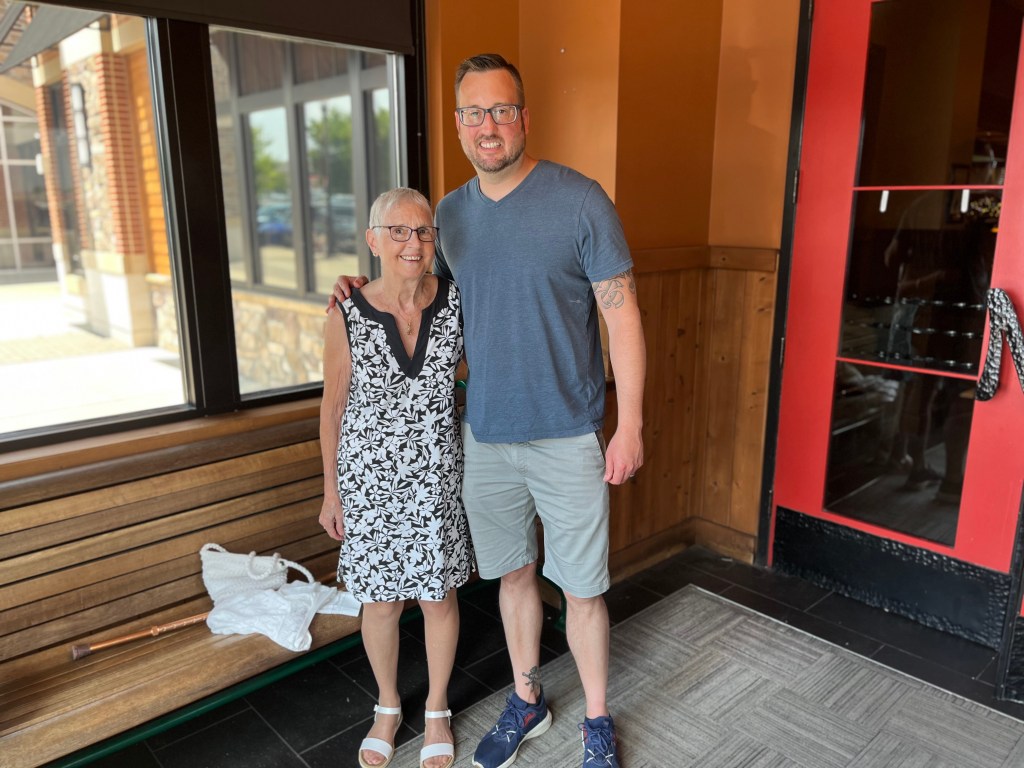
Over the past three years, we’ve traded texts, calls, book recommendations, and more as we’ve navigated recovery after stroke.
In fact, several of the books I’ve read and linked to on this blog were suggested to me by Betsy. Without her, I wouldn’t have found these resources.
Some of The Best Advice I Received After Stroke
I was fortunate that I knew someone who had a stroke before I did and when he reached out to me after my stroke, I knew he’d offer great insight.
We knew him in the gym as ‘Dink’ or ‘Coach’ and he gave me some of the best advice post-stroke.
He told me “Blair, now that you have to make a comeback, you’ll learn what really works for you.”
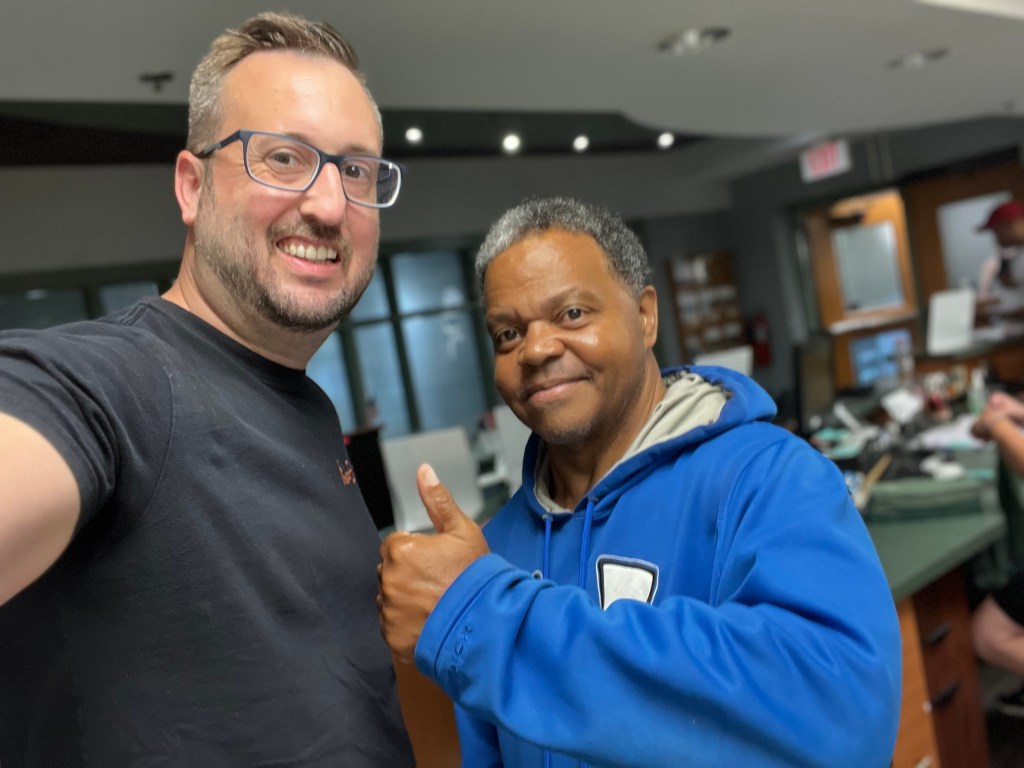
That piece of advice has been wildly accurate. After having a stroke, you learn what makes you tick and what your body best responds to.
I still have my handwritten notes from our first call when he told me that.
Beyond the great advice you can find, there are also funny stories that can come out of sharing your stroke experiences with others.
For example, Dink and I both shared a fear of curbs early in our recovery.
It seems ridiculous, but when you’re learning to walk again without a hand railing, stepping off of a curb can feel like you’re walking the plank of a pirate ship!
How to Find a Stroke Survivor Support Group
I’ve joked with Betsy and Dink that they are my ‘stroke advisors.’ They’ve offered countless words of wisdom that have benefited me over the past three years. I certainly would not be where I am today without their guidance.
If you’d like to find a stroke survivor support group to connect with other stroke survivors, the American Stroke Association has an online tool to find support groups near you.
The stroke support group I attend most often has a virtual option and is hosted by Frederick Health Hospital in Frederick, Maryland.
Or if you just want to talk with someone else who has had a stroke, my DMs are always open.
I don’t offer any coaching services, no silly Inner Circle or other membership requirements. I just enjoy chatting with other stroke survivors and would be happy to speak with you.
You can find all my social media links on the contact page to reach out or you can simply comment on any newsletter or blog post.
 Stroke Recovery Rehab