Since my stroke in May 2021, I’ve woken up each morning feeling like a peg-legged pirate. My left leg is often numb and heavy as I get out of bed to start my day.
Over the years, I’ve tried many therapies to regain feeling in my left leg to reduce this heavy limb sensation – acupuncture, cupping, ice baths, massage, walking barefoot, sauna and electrical stimulation just to name a few.
But much to my surprise, nothing has helped my left leg feel more like the leg I remember and less like a thousand-pound steel beam than a slacklining session.
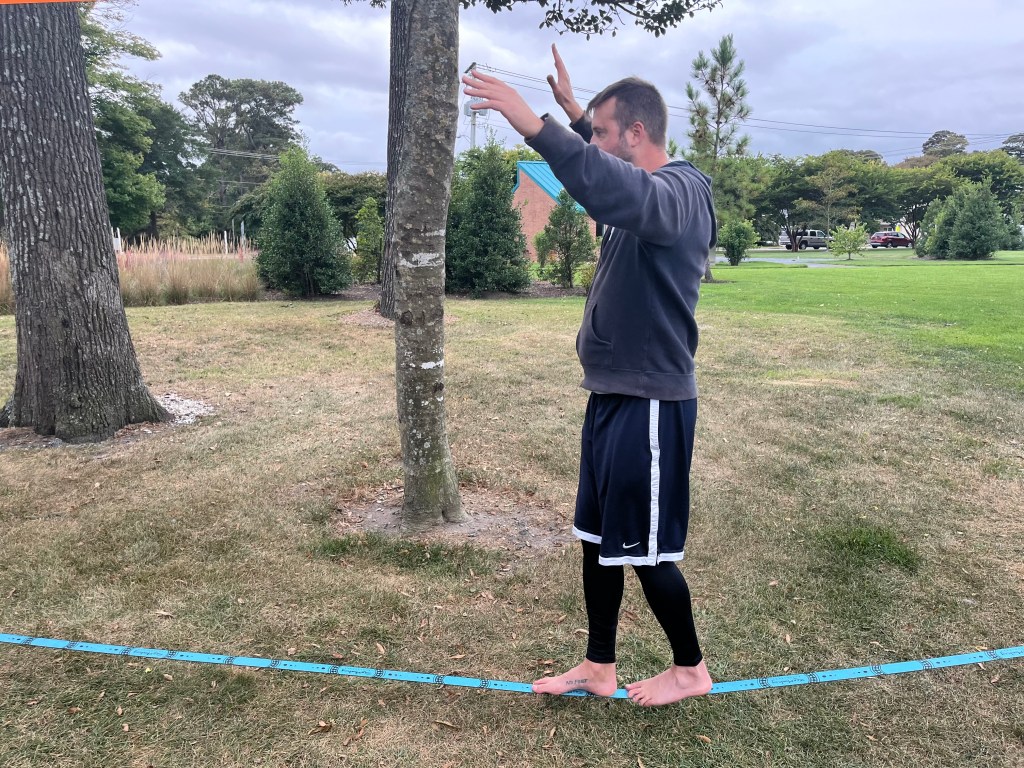
This simple yet challenging exercise has helped me improve my balance and agility while also regaining some feeling in my stroke-affected left leg.
I had never stepped foot on a slackline before I had a stroke. Today, it’s one of my favorite things to do.
What is Slacklining?
Slacklining is an outdoor sport where you’re challenged to stand or walk on a 2- to 3-inch-wide webbed line. While indoor versions are available, slacklines are often strung between two trees.
The distance of the trees and height of the slackline is up to the user as a higher and longer line is more challenging than a shorter slackline hung closer to the ground.
While it looks intimidating, you don’t need to become a professional daredevil to benefit from slacklining.
In fact, walking across the slackline isn’t necessary to experience the benefits I’ve found in this unique rehabilitation exercise.
Walking on a slackline is a fun challenge, but just practicing single-leg and tandem-style balance exercises is very effective. These simple exercises have helped me to feel more agile and less stiff in my stroke-affected left leg.
The Benefits of Slacklining After Stroke
About eight months after my stroke, I stumbled upon a YouTube video of a woman discussing how slacklining helped her in stroke recovery.
I was vaguely familiar with slacklining after seeing other videos on social media, so I quickly went to Google to see if there was any evidence to back up her claims.
I was surprised to find a series of case studies that described how slacklining helped two women recovering from stroke and traumatic brain injury.
According to these case reports, the two women — aged 87 and 40 — reported less fatigue as well as improved balance and confidence from slacklining.
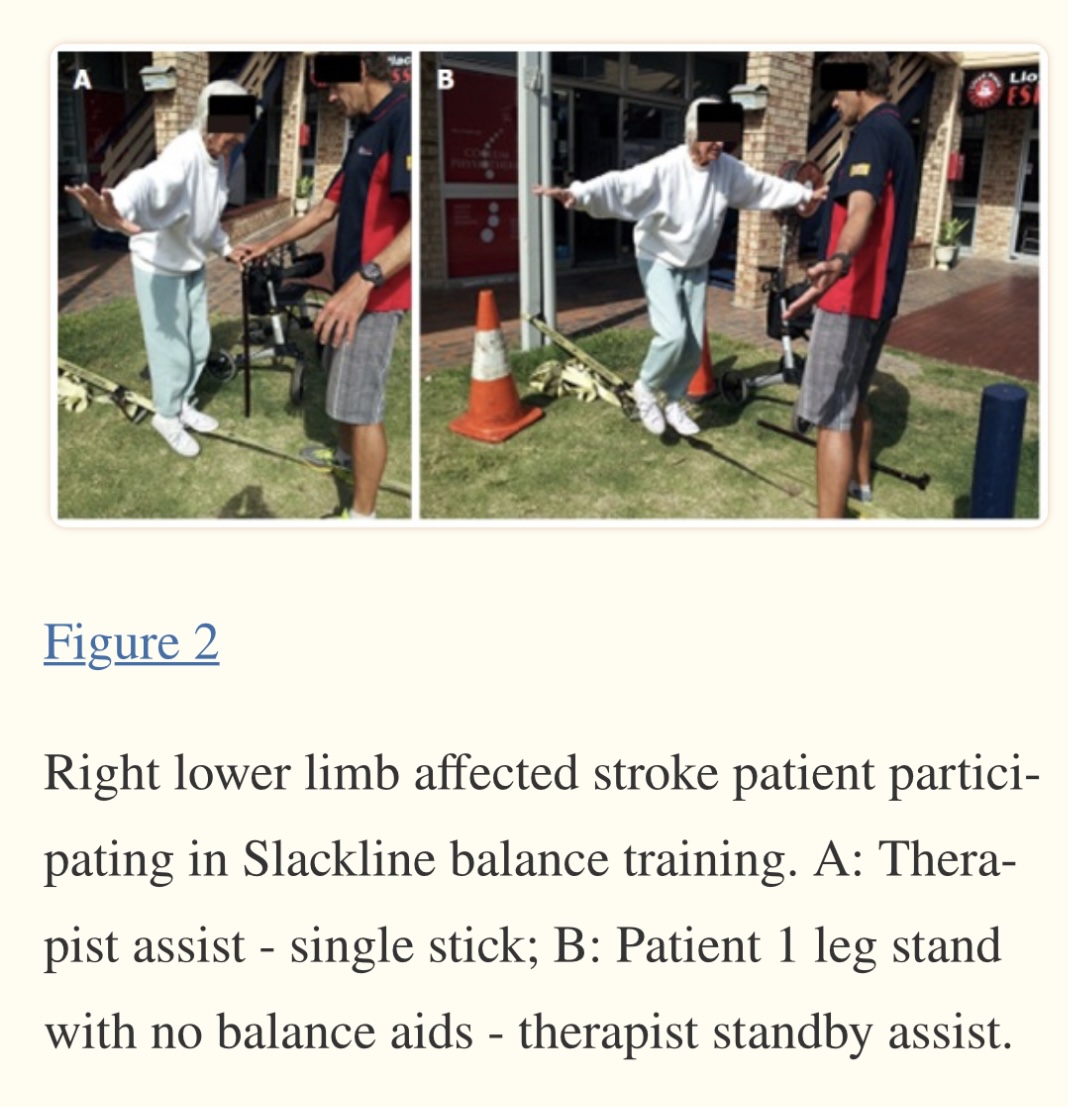
The authors of the case studies reported, “Slacklining’s external stimulations activate global-body responses through innate balance, optimal postural and potentially down-regulated reflex control. Incorporated into stroke rehabilitation programs, slacklining can provide measurable functional gains.”
Slacklining’s external stimulations activate global-body responses through innate balance, optimal postural and potentially down-regulated reflex control. Incorporated into stroke rehabilitation programs, slacklining can provide measurable functional gains.
Additionally, research involving people who haven’t had a stroke or TBI also indicate that slacklining can improve physical performance.
One study found that slacklining may help youth soccer players improve agility and another showed that paralympic skiers reported better balance after slackline training.
My Experience with Slacklining in Recovery After Stroke
After reading the case reports related to slacklining after stroke and TBI, I excitedly went to Amazon and ordered a beginner’s slackline set.
Once I tried the slackline, I was surprised at how quickly I noticed a difference.
Even though my early practice sessions — about 10 months after stroke — were just experimenting with various ways just to stand on the line without falling, I felt much more fluid and athletic from the hips down when walking.
This was a welcome change considering my left side often felt like the rusty Tin Man due to the stroke.
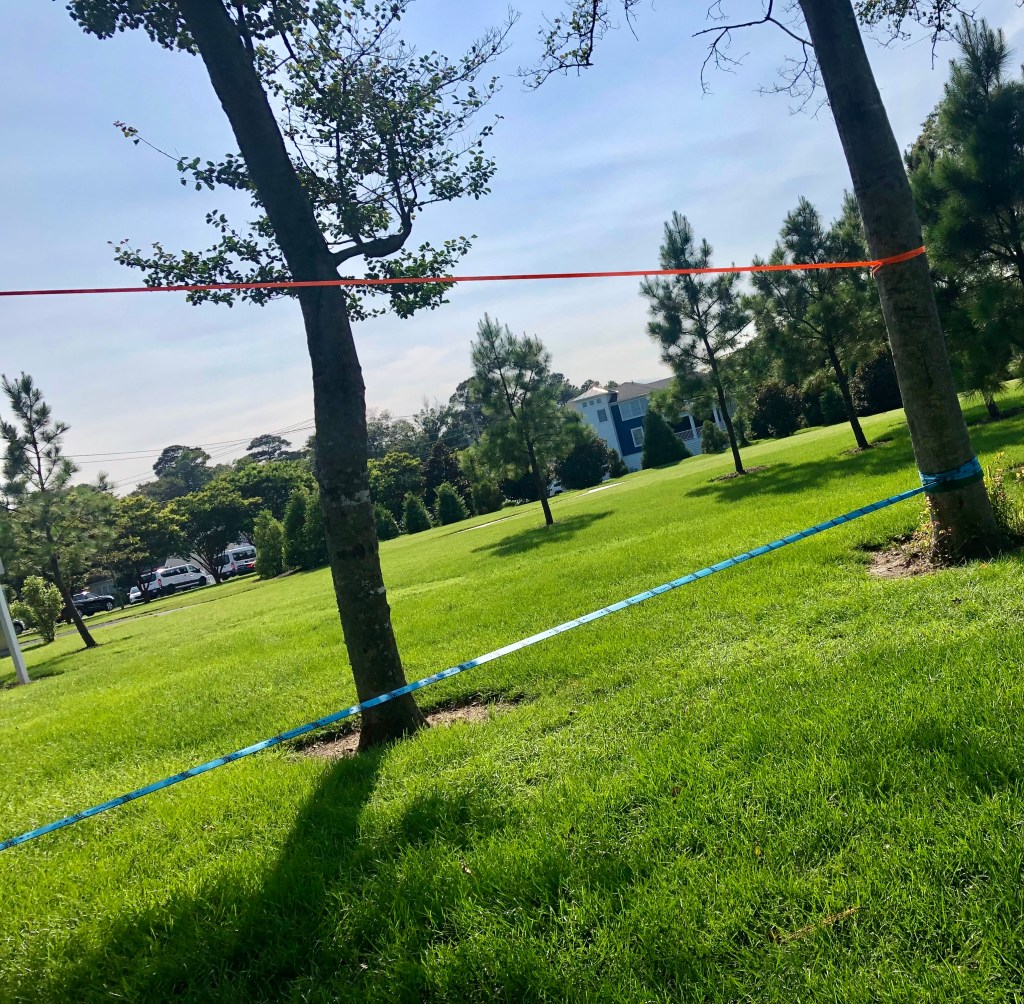
Over the years, as I’ve gone from barely standing on the slackline to walking across it, I’ve noticed significant improvements in balance as well as short-term improvements with agility and the heavy leg phenomenon.
There has been no more beneficial balance exercise for me than slacklining. The vibration, bouncing, and unpredictability of the line is a great challenge that makes slacklining a unique rehab exercise.
Unfortunately, the benefits I experienced related to that heavy leg feeling after slacklining have been temporary. While I often feel great the next day after using the slackline and that heavy leg phenomenon is much improved, that benefit fades in the following days.
However, I can only slackline a few times a month due to weather and time constraints, so I have no idea if a more consistent slacklining routine would be helpful. My guess is it would be since more consistent practice is a common-sense approach and improving balance is a critical component to any physical pursuit.
How to Add Slacklining to Physical Therapy After Stroke
The benefits I’ve felt from slacklining over the years have far exceeded any of my expectations.
However, slacklining is not an easy hobby to pick up, especially when you can’t feel one of your legs. The first few practice sessions can be discouraging just trying to stay on the line, but there are some simple steps you can take to reduce the learning curve.
Here are a few strategies that helped me learn how to slackline:
- Train With a Partner
It’s difficult to stand on a slackline at first, so having a friend or family member there is essential to help prevent any falls.
- Be Patient
When it comes to slacklining, there’s no need to rush trying to progress to walking across the line. I’ve used the slackline off and on for over two-and-a-half years and it took well over a year before I could walk from one end to the other without the top support line.
- Use a Training Line
Hang a training line slightly above your height so you can reach above your head to use it for support. This will help prevent falls and allow you to spend more time on the line.
- Hang a Low Line
The lower you hang the slackline, the easier it will be. In the case reports I mentioned above, the slackline was hung just about a foot off the ground. This way when an individual stands in the middle of the line, the slackline is mere inches off the ground.
In terms of finding a slackline, there are many slackline kits available on Amazon, most of which range from $50 to $100. I’ve used slacklines from FlyBold and ZenMonkey, both of which I’ve enjoyed.
*The exercises described in this blog post and elsewhere on this site are for informational purposes only and are based on my personal experience with stroke recovery. They are not a substitute for professional medical advice or treatment from a physical therapist.
 Stroke Recovery Rehab
Slacklining is so unique, thanks for sharing your experience.
LikeLiked by 1 person
Thank you, and I’m glad you enjoyed the blog! I’ve tried to replicate the benefits of slacklining with other exercises, but haven’t found anything that comes close. Slacklining is very unique, indeed!
LikeLike