By Blair Ames and Tracy Myers
Having a stroke can be a very confusing experience.
You can feel sick or dizzy with blurred vision in the moments before one side of your body shuts down, and you can lose your ability to speak with others due to aphasia.
After you’ve been rushed to the hospital with one side of your body paralyzed and you’ve undergone various medical imaging procedures, the doctors are ready to tell you what’s going on.
“You’ve had a stroke due to a ruptured arteriovenous malformation – a rare condition also known as an AVM,” they say.
Learning your life has been instantly turned upside down because of an absolute tongue-twister of a word with an acronym you’ve never heard before can be overwhelming in the earliest moments after stroke.
It’s a lot of information to understand all at once, especially if you have no prior knowledge of what can cause a stroke or what happens when you have a stroke and why one side of your body all of a sudden no longer works.
What is an Arteriovenous Malformation?
An arteriovenous malformation is an abnormal tangle of blood vessels that formed improperly – most likely before you were born, although the exact cause of an AVM is not fully understood.
AVMs are commonly described as looking like a bird’s nest or a bowl of spaghetti noodles. In an AVM, the high-pressure arteries connect straight to low-pressure veins instead of the blood vessels connecting through a capillary as they should.
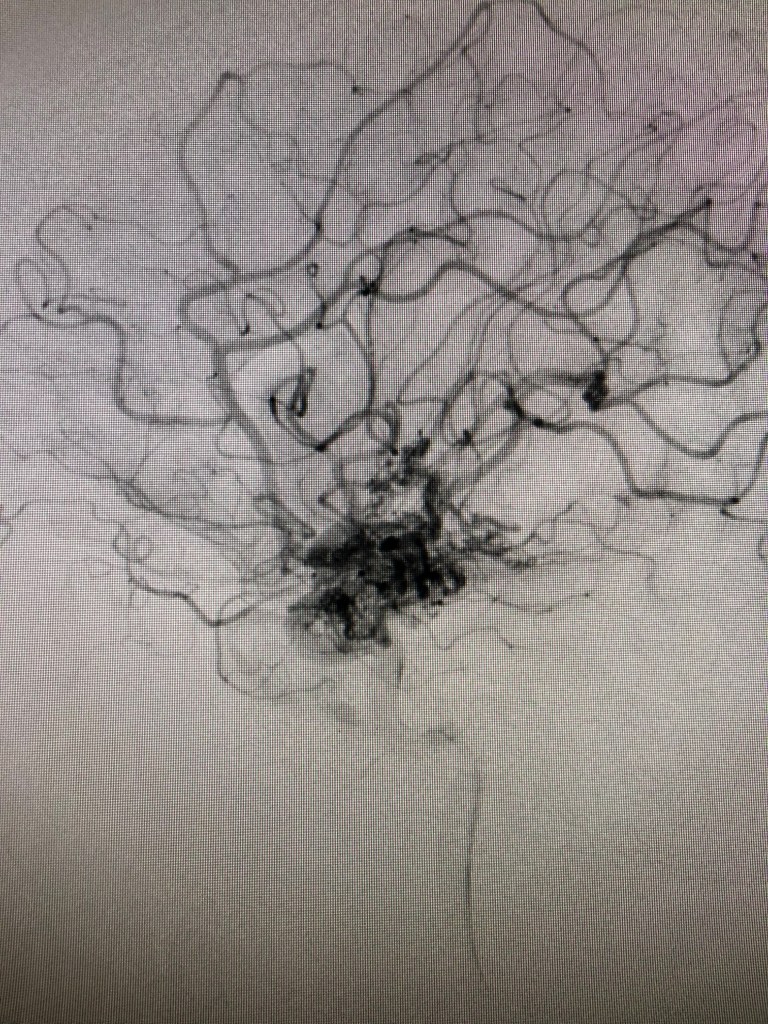
Capillaries are critically important because they help regulate blood flow between veins and arteries. In turn, the blood vessels in an AVM can weaken over time with the capillary missing, putting them at risk of rupture and causing a stroke.
AVMs are relatively rare, affecting less than 1% of the population. They can occur anywhere in the body, but most are in the brain or spinal cord.
Oftentimes, arteriovenous malformations are discovered when they cause medical issues, like a stroke, or by accident when they are found in medical imaging for unrelated issues.
Most people who have an AVM have no idea and can live their entire lives without ever experiencing issues.
Why Do AVMs Rupture?
Since AVMs are rare, strokes caused by an AVM are also uncommon – AVMs are only responsible for about 2% of all hemorrhagic strokes each year.
As Jill Bolte Taylor points out in her book ‘My Stroke of Insight’, “Although the AVM accounts for only two percent of all hemorrhagic strokes, it is the most common form of stroke that strikes people during their prime years of life (ages 25 to 45).”
Although the AVM accounts for only two percent of all hemorrhagic strokes, it is the most common form of stroke that strikes people during their prime years of life (ages 25 to 45).
There’s often no singular cause for why an AVM would burst and cause a stroke.
However, AVMs that have ruptured once are more likely to bleed again than those that have not, which makes treating AVMs that have already ruptured critical.
AVM Treatment Options
There are several potential treatment options for AVMs after stroke, including surgery, embolization, and radiation.
The appropriate treatment for an AVM depends on several factors, including the location and size of the AVM, the patient’s condition and more.
Some AVMs can be removed in surgical procedures, others can be reduced in size through radiation, and others can be blocked through embolization, which diverts blood flow away from the AVM.
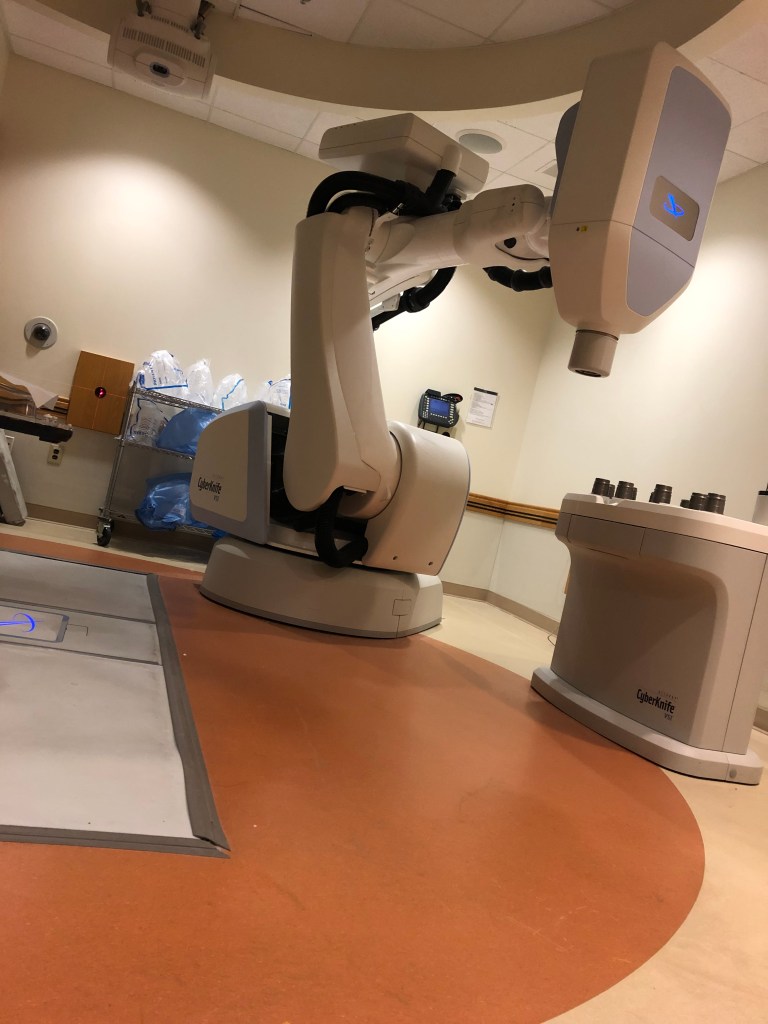
In the years following any of these procedures, you’ll have subsequent MRIs and other imaging procedures to ensure success.
Dr. Phil Stieg, who wrote the book on AVM treatment options, has several videos on YouTube discussing the most appropriate treatment strategies for AVMs depending on the situation.
AVM Stroke Recovery
While AVMs only account for a small percentage of strokes, there aren’t any unique side effects in strokes caused by an AVM.
Like all stroke survivors, those who have had an AVM stroke can struggle with various physical and mental challenges, emotional changes, fatigue, aphasia, and other deficits.
As with any stroke, recovery is a years-long process and some deficits are more difficult to shake than others in the years after stroke.
The immediate focus after stroke is often on just surviving and reaching certain accomplishments or milestones in therapy, but it’s often hard to deal with the “what now” part of things.
Specifically, aphasia can cause struggles with finding the right words, but not a loss of intelligence as the speech challenges would lead people to believe.
Living with an AVM that wasn’t surgically removed after a stroke can also be somewhat concerning due to the risk of experiencing another stroke. However, your doctor will advise on any activities that may be risky for your situation as you undergo alternative treatment options, such as radiation.
AVM Stroke Survivor Resources
Since AVMs are quite rare, it can be challenging to find information relevant to your situation that explains this unique medical condition in layman’s terms.
The Aneurysm and AVM Foundation offers an extensive look at arteriovenous malformations, including what causes AVMs, how they’re found, and potential treatment options.
For another comprehensive overview of arteriovenous malformations, this lecture by Dr. Stieg provided to the Seattle Science Foundation provides more details, from why they form to appropriate treatment options and more.
Finally, this video that feels straight out of your middle school science class provides some unique visualizations of what happens when an AVM ruptures.
 Stroke Recovery Rehab