By Blair Ames and Anadee Nikte
It can be hard to find your footing after a stroke: both literally and figuratively.
Physical challenges, such as balance issues, are common for stroke survivors, but as you return home from the hospital as a vastly different person than you were pre-stroke, it’s also a struggle to simply re-establish the lifestyle you want due to your various limitations.
When it comes to medical advice, stroke survivors often face a cobweb of doctors and therapists, each providing detailed instructions for their specialty.
Unfortunately, once physical therapy sessions end and visits to the doctor become less frequent in the years that follow, many survivors are generally on their own to find solutions for their lingering deficits.
While the road to recovery after stroke looks different for everyone, creating a personalized structure that supports ongoing progress is one of the most important things a stroke survivor can do.
Stroke Recovery Perspectives from an Occupational Therapist
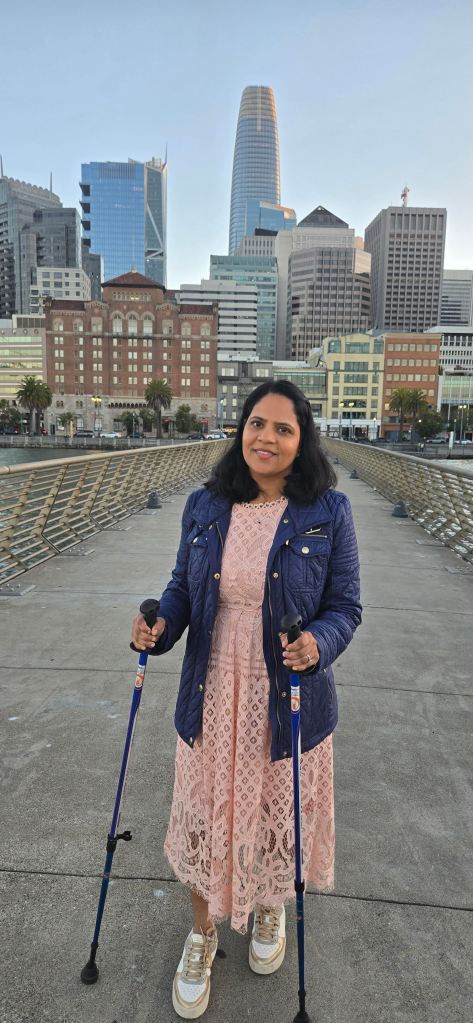
Anadee Nikte is an occupational therapist, healthcare manager, mother of two young children, and a health coach with over 15 years of experience in neurorehabilitation.
As someone who dedicated their career to helping others rebuild their lives after injury, Anadee found herself on the other side of recovery when she experienced a spinal artery ischemic stroke early in 2025.
For Anadee, life felt disorganized, uncertain, and filled with questions after stroke.
Each day brought new challenges: the frustration of limited mobility, the exhaustion of small tasks, and the quiet fear of not knowing what progress would look like.
The routines she once guided others to build now felt out of reach. Fear and uncertainty clouded her thoughts — not just about physical recovery, but about identity and purpose.
Would she regain her independence? Would she be able to return to the work she loved? Would life ever feel “normal” again?
Since her stroke, she’s had to apply every principle she once taught her patients to her own recovery. What emerged from her experience with stroke are the pillars that now form the foundation of how she coaches and supports others.
Anadee’s Framework for Stroke Recovery
Recently, Anadee and I traded messages on social media about how to build positive habits, structure, and routine for long-term recovery after stroke.
As we discussed our experiences in life after stroke, Anadee outlined the following six-step framework that helped her in recovery:
1. Start with Purpose and Identity
Shift from “I’m recovering from a stroke” to “I’m rebuilding my best self.”
When a person’s identity centers around loss, recovery feels reactive. When identity centers around growth and purpose, recovery becomes proactive.
2. Focus on Neuroplasticity-Friendly Habits
Stroke recovery thrives on a balance of repetition, challenge, and rest. Encourage routines that nourish the brain, such as:
- Physical: Daily movement. Even short, intentional exercises are helpful.
- Cognitive: Reading, puzzles, or learning something new.
- Emotional: Journaling, mindfulness, and positive affirmations.
- Social: Short phone calls, group sessions, or peer chats to stay engaged.
3. Use Structure, Not Rigidity
Consistency builds progress, and flexibility prevents burnout. Create a daily framework that is both predictable and adjustable.
Example: “Three-Block Routine”
- Morning: Self-care, light stretching, gratitude journaling.
- Midday: Therapy/home exercises, social connection, rest.
- Evening: Reflection, relaxation, tomorrow’s prep.
4. Focus on Micro-Goals and Small Wins
The brain loves success feedback loops. Turn large recovery goals into micro-goals that create momentum.
Instead of: “I’ll walk independently again.” Try: “I’ll stand at the counter for 2 minutes longer this week.”
Reward progress with visible tracking, such as charts, digital milestones, and activity tracking apps.
5. Practice Self-Compassion and Mindset Training
Setbacks are part of rewiring. The goal is not perfection but persistence.
Use mindfulness or coaching techniques to reframe frustration:
- Replace “I can’t do this yet” with “My brain is still learning this.”
- Schedule “recovery reflection” days to note lessons, not losses.
6. Optimize the Environment for Success
Environment shapes behavior more than willpower.
- Keep exercise tools visible—for example, a resistance band near the TV.
- Use cues (sticky notes, alarms, or labels).
- Ask a friend to work out with you.
- Make the environment “recovery-ready” — organized, clutter-free, and use adaptive equipment as needed.
The Importance of a Framework in Stroke Recovery
I found Anadee’s outline for a stroke recovery plan compelling because it aligned with many of my personal experiences in recovery after stroke.
Like Anadee, shifting my mindset to be more forward-looking and setting short-term goals has been incredibly helpful for me in the years after stroke.
As Anadee suggests, other habits like journaling, participating in support groups, and starting a mindfulness practice can also be a significant help for stroke survivors.
Lastly, her suggestion to keep exercise tools visible resonated with me as well. I still keep rubber bands and other gadgets for various hand exercises near my desk for whenever I’m on a long phone call.
On the hardest of days, having these habits in place has helped me to believe my recovery after stroke was always progressing, even if I didn’t feel great at the time.
Creating Your Stroke Recovery Plan
In the years after stroke, recovery can feel like a lonely journey as you seek to rebuild the life you once knew.
There is no perfect way to rebuild yourself after a stroke, and it can be difficult to piece together advice as you bounce from one medical specialist to another.
However, simply acknowledging that recovery will be an ongoing process, and creating a personalized framework that promotes continued progress by helping you stay consistent with therapy are great starting points.
If one of Anadee’s pillars resonated with you, think about how you can incorporate that advice into your own stroke recovery plan moving forward.
As Anadee describes, the brain loves success feedback loops. Starting with any small goal can help build momentum in recovery after stroke.
 Stroke Recovery Rehab