The gym I go to only has one set of 50-pound dumbbells.
It’s unique in that there are two sets of almost every other weight. But there’s a more personal aspect of it for me.
On the day I had my stroke, in this very gym, I was using the 50-pound dumbbells.
Are they the weights I was holding when I had my stroke?
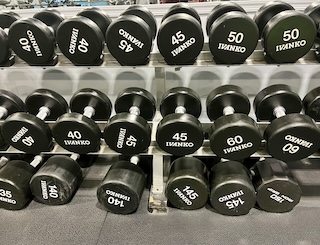
It’s a question I often think about these days when I go to grab a 50-pound dumbbell because for so many years, simply getting back to this point was my goal.
Yet, it took much longer than I ever expected it to.
While exercise is lauded as one of the most important aspects of recovery after stroke, it’s a frustrating paradox.
How do you exercise when you can hardly move one side of your body?
My Challenges with Returning to the Gym After Stroke
In the earliest weeks after stroke, as I sat alone in my hospital room, I was always thinking of how I’d regain my strength and what exercises I could do when I returned home.
However, once I was released from the inpatient rehab center and my outpatient physical therapy sessions ended, exercising and returning to the gym proved to be much harder than I had anticipated.
First off, I couldn’t drive myself there. Simply being in a moving car made me dizzy.
Second, standing for long periods left me exhausted, especially in crowded areas, which often had me looking for places to sit down and rest.
Then, when I actually tried to lift weights, I still had limited sensation on my stroke-affected left side, so a 20-pound weight felt like it weighed more like 100 pounds.
Lastly, crowded gyms generally felt overwhelming because of all the loud noises and visual information my injured brain was trying to process.
Working out at the gym – what I thought would be an obvious part of my recovery – turned out to be a depressing experience.
Why Exercise After Stroke is Critical
Regular exercise is an essential aspect of stroke recovery because of the many ways it can help the brain.
Stroke recovery resources often highlight brain-derived neurotrophic factor, also known as BDNF, as if it’s a miracle supplement. The brain uses BDNF to strengthen neuronal connections and support neuroplasticity, a key principle of stroke recovery.
Unfortunately, you can’t just take BDNF like it’s a multivitamin.
Instead, exercise is one of the key triggers for the brain to produce BDNF. Without exercise, BDNF to support neuroplasticity is limited and recovery after stroke can falter.
4 Strategies for Stroke Survivors in the Gym
Stroke survivors know that recovery doesn’t end when the physical and occupational therapy sessions end.
Instead, you’re often on your own to find a way to rebuild your strength after a stroke, and the gym can be an important part of that.
While I struggled to feel comfortable working out in a gym after stroke, here are four strategies that helped me improve my gym workouts:
1) Take it Slow
There’s no need to rush yourself back into the gym before you’re ready. While working out at a gym is a great post-stroke habit, there are also plenty of exercises you can do at home or elsewhere that might better fit your current abilities.
In fact, bodyweight exercises can also improve neuromuscular efficiency, which is how your brain communicates with your muscles.
2) Use Music
With weights clanking, people talking, and many other distractions, the gym can feel overwhelming. To limit distractions, bringing headphones to play your preferred music is essential for focus and motivation.
Research has shown that music can make you feel stronger and improve your physical abilities during exercise.
3) Try Myo-Reps
Once I returned to the gym, I didn’t feel comfortable standing for long periods so any exercises done standing were pretty much out of the question.
To work around this, a simple routine I followed early on were myo-rep circuits on various machines. Myo-reps are a variation of rest-pause training where you use light weight for higher reps.
For example, you’ll start with one set of 15-20 reps, which is your activation set. After a short break – such as 3 to 5 breaths – you’ll do 3-to-5 sets of 3-to-5 reps using the same weight. That’s one myo-rep circuit and then you move on to your next exercise.
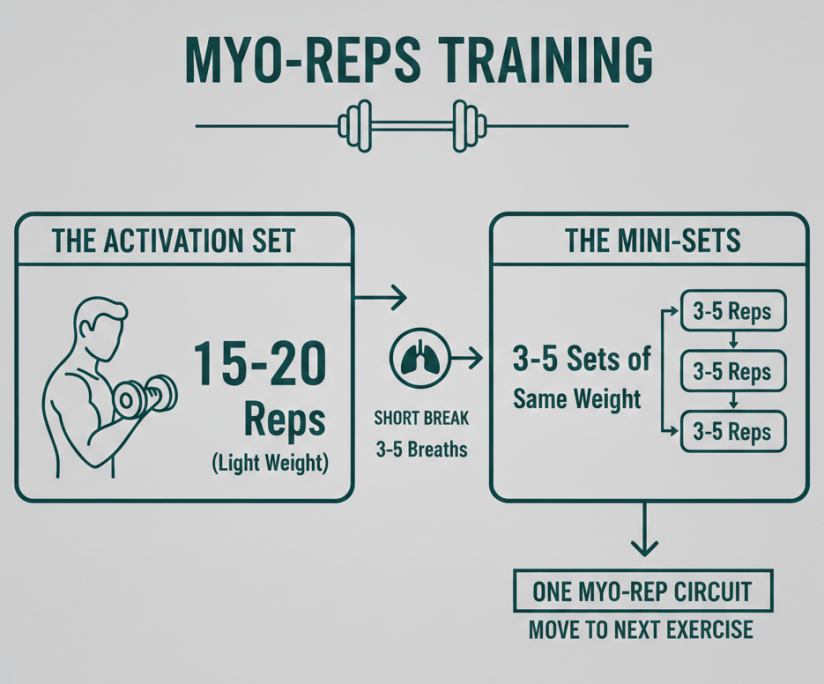
This simple routine allowed me to hit nearly every machine in the gym, all done while sitting down, which fit my current abilities at the time.
Beyond their convenience, using high rep strategies like myo-reps early in rehab may also be better than using heavier weights to re-learn various movement patterns.
4) Train One Side at a Time
If you’re anything like me, you’ve noticed your dominant leg or arm compensating for your stroke-affected side during exercise.
To prevent this, unilateral training, or training one side at a time, can be helpful.
In fact, research has shown that training one side actually strengthens the other through a cross-education effect. While it’s counterintuitive, when you train one side of the body, the brain’s neural pathways for the other side are also activated which leads to strength improvements.
Exercises for Stroke Survivors
These days, I don’t go to a gym as much as I did pre-stroke. Instead, I prefer exercising outside at the local park and doing other outdoor activities, such as slacklining, but the gym is essential in the wintertime for getting out of the house.
While I may never know if those 50-pound dumbbells are the same weights I was holding when I had my stroke, it’s a huge relief to use them again now five years post-stroke.
It took a lot longer than I hoped, but with some patience and a little help from workout strategies like myo-reps and unilateral training, I’m once again confident working out in the gym.
 Stroke Recovery Rehab