Life after stroke can be confusing.
As you learn to navigate the world around you with a body and mind that don’t work as you remember, you’re often bombarded with information to improve your recovery from doctors, therapists, friends, and family members.
There are even people who sell themselves as “stroke recovery coaches,” claiming they can help your recovery.
It’s a lot of information to process so early after stroke, especially when you can be managing cognitive deficits in addition to the physical disabilities caused by stroke.
Like anyone else, I received some great – and not so great – advice after stroke.
Looking back on my early stroke recovery experiences, here is some of the best advice I received, some of the worst, and some advice I would now give other stroke survivors.
You’ll Learn What Works Best for You
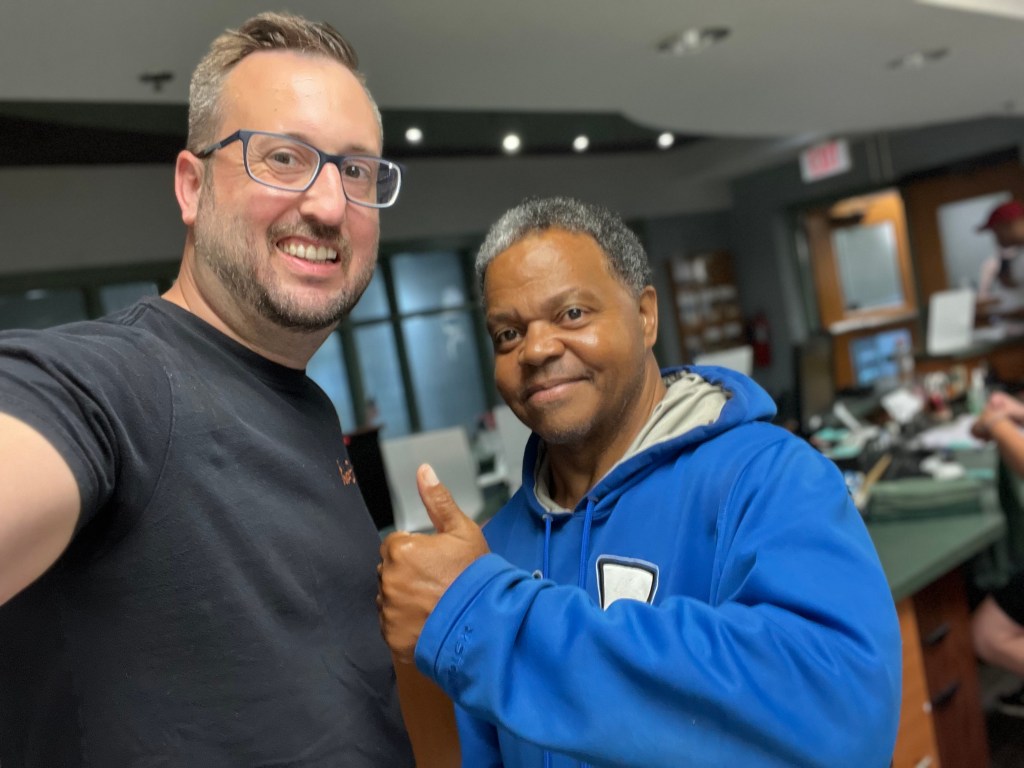
Shortly after my stroke, I was told by a friend and fellow stroke survivor, “Blair, now that you have to make a comeback, you’ll learn what really works for you.”
That piece of advice has been spot-on. After a stroke, you’ll learn that you can’t always fall back into your old habits, and you’ll have to find new ways of doing things that now work for this new version of yourself.
Although it can be frustrating, those changes aren’t always negative.
Over time, you’ll learn the exercises and lifestyle habits that work best for you and help you improve your recovery.
For me, focusing on bodyweight exercises, training outdoors, prioritizing sleep, and cutting alcohol and caffeine have all been significant changes from my pre-stroke lifestyle. But now, I enjoy these new habits and have found them to be a huge help in recovery after stroke.
Throughout this blog, I’ve highlighted many of the other exercises, habits, and supplements that have helped me, and I hope some of the lessons I’ve learned can apply to your recovery.
But at the end of the day, what has worked for me won’t work for everyone. Everyone has different hobbies and personal preferences that shape their recovery after stroke.
Stroke Recovery is Best Measured in Months and Years
As I was bedridden in the hospital, my neurosurgeon stood in the doorway of my room and told me “Recovery after stroke is best measured in months and years, not in days or weeks.”
At the time, I was not impressed with this advice and was looking for something more inspiring.
Yet, that comment turned out to be some of the best advice I received after stroke.
Considering the fluctuations in how you can feel day-to-day after a stroke, taking a step back to look at long-term progress is a much more appropriate way to think about recovery.
Although the one-year mark of stroke recovery is built up as this moment when stroke survivors will be “fully recovered,” I’ve been surprised at how I continue to feel and see noticeable differences now several years post-stroke.
Looking back, I can see and feel significant differences from year five compared to year four or year three compared to year two.
The Worst Advice I Received After Stroke
I had started to walk with no assistance relatively quickly at inpatient rehab — about two weeks post-stroke.
However, when I returned home and ditched the walker for good, my stride had become more of a lurch. You could hear my left foot slap the ground every time I walked.
With no fluidity in my movements, I walked around the neighborhood like Frankenstein.
When I asked my physical therapist at outpatient therapy how I could fix the nasty limp I had developed, she told me “Walk on your heels,” as in having my heel strike the ground first and then rolling onto the ball of my foot as I took a step.
I was skeptical of this advice – it made me look like I was walking as if I needed to urgently use the bathroom – but I tried this strategy of “walking on my heels” and it predictably flopped.
Instead, I learned that improving your ankle strength and flexibility was more important than following the oversimplified advice of consciously thinking about every step you take.
My Advice on Stroke Recovery
If there’s one piece of advice I would share about stroke recovery, it would be to lean on your hobbies or personal interests to guide your own recovery.
Since motivation is a critical piece of neuroplasticity, incorporating your hobbies into your rehabilitation program can be helpful.
Peter Levine describes why stroke survivors can benefit from working on things they are passionate about in his book Stronger After Stroke.
“The more cherished the task, the more focus will be brought to the training and the more brain rewiring will occur,” Levine writes.
For me, as someone with a background in running, exercise has always been a passion of mine, so it’s been natural to push myself through various rehab exercises.
But some of the best stories I’ve seen from other stroke survivors over the years are people using their hobbies as motivation in recovery, whether that’s diving, gardening, or shooting pool.
What looks like a crazy achievement months or years down the road probably started with someone who was passionate about doing that one very thing and then slowly chipped away at it over time.
 Stroke Recovery Rehab