I don’t think I’ll ever forget my physical therapist’s advice when I asked her how I could fix the nasty limp I had developed about 3 to 5 weeks after my stroke.
“Walk on your heels,” she told me, as in having my heel strike the ground first and then rolling onto the ball of my foot as I took a step.
My initial response was pretty much “Huh? That’s it?”
I had started to walk with no assistance relatively quickly at inpatient rehab — about 2 weeks post-stroke.
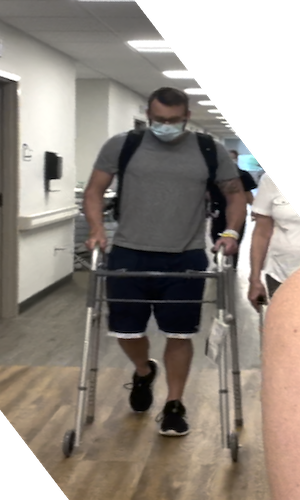
However, when I returned home and ditched the walker for good, my stride had become more of a lurch. You could hear my left foot slap the ground every time I walked.
Walking dysfunction, such as limping or shuffling, is common among stroke survivors as we’re all so anxious to get back to walking that we skip over developing basic movement patterns in favor of moving forward as fast as we can.
I wasn’t thrilled with the advice from my therapist, but I tried this strategy of “walking on my heels” over the following weeks and it predictably flopped. I still looked like Frankenstein every time I shuffled around the neighborhood.
Instead, I was able to fix my stride and stop limping with a simple at-home program I had been using in the weeks before my stroke.
Knees Over Toes in Recovery After Stroke
Just a few weeks before my stroke, I had signed up for coaching through the ATG program to hopefully reduce some knee pain I’ve dealt with much of my adult life.
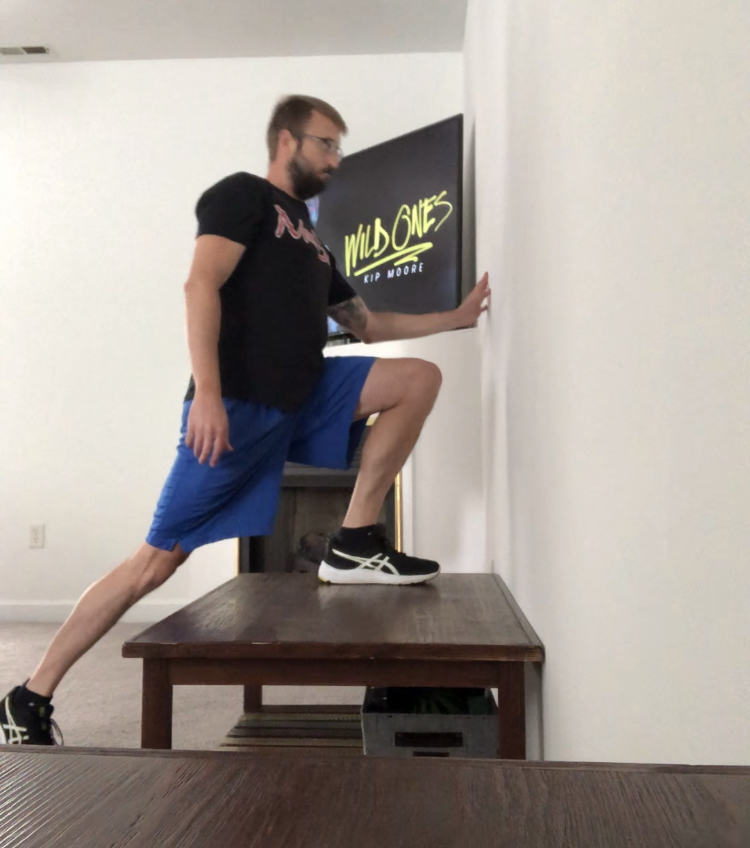
The ATG Zero program is a straightforward at-home series of workouts that requires no equipment and can be completed in under an hour. It’s intended to prevent knee injuries and the series of exercises includes single leg calf raises, split squats (pictured), walking backwards, and more.
In one of the earliest training videos I ever watched, ATG Coach Ben Patrick said something along the lines of “this program rebuilds your legs from the ground up.”
Well, considering my left leg was just paralyzed, I thought restarting this program might be just what I needed.

4 Essential Stroke Recovery Strategies
Subscribe to the free monthly newsletter and I’ll send you a short article highlighting the four things I wish I’d started sooner after stroke.
The Impact of Knees Over Toes in Stroke Recovery
It didn’t take long for me to start feeling the effects of incorporating Knees Over Toes principles in my rehab.
In the weeks after returning home from inpatient rehab, I had tried stretching, single leg stands, and many other movements trying to eradicate the limp I had developed, all to no avail.
I would stretch and stretch and stretch, then walk across the living room, still with the lurch.
However, when I worked through the ATG program, and in particular the “Patrick Step,” which is a version of a step up (video). I was flabbergasted when I started walking around the house limp free.
Described further in this video at the 1:50 mark, this simple exercise helped me regain flexibility in my left leg.
The key was focusing on keeping my heel on the ground while I pushed my knee forward to touch my opposite foot on the ground. Using a counter for support was essential as it allowed me to lengthen the stretch.
In general, our mobility is heavily dictated by our ankle strength and flexibility. The Knees Over Toes circuit helps in this area by strengthening our ankles and improving ankle flexibility through exercises such as the Patrick Step, tibialis raises and multiple calf raise variations.
Additionally, the simple act of walking backwards for roughly 10 minutes provided some significant benefits in improving my balance. The cliche “the faster you can move backward, the faster you move forward” was certainly true in my case.
The ATG Zero program quickly became a staple in my recovery efforts and I continue to use ATG principles in my training to this day. As evidenced by the photo, my lower body flexibility is better now than it was pre-stroke.
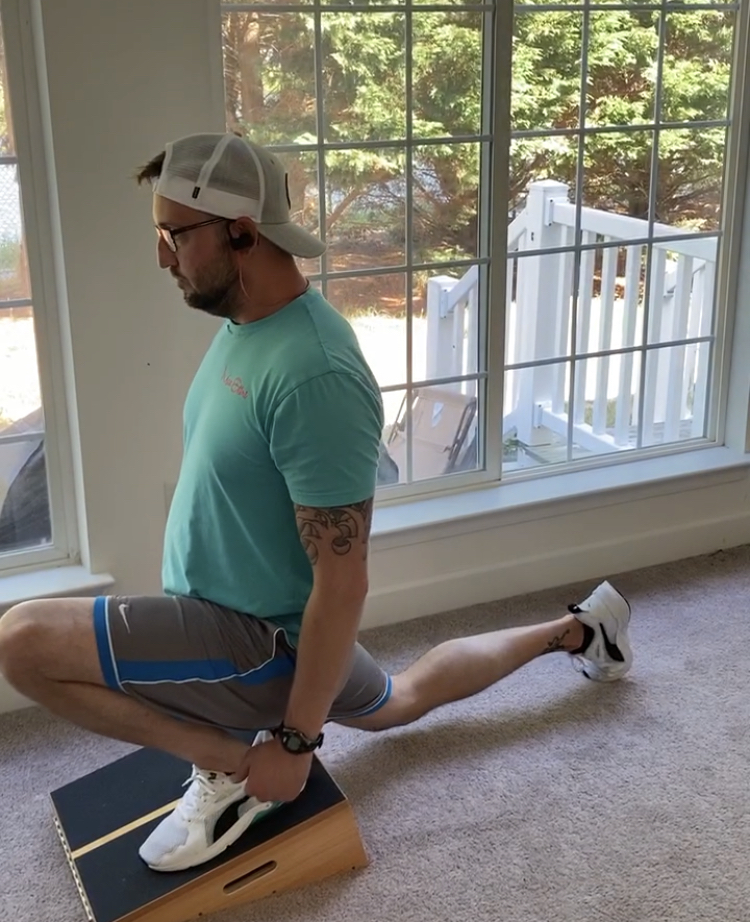
In fact, it appears I’m not the only stroke survivor who has had noticeable results from the ATG program. This YouTube video highlights another man recovering from stroke who has found the program helpful.
 Stroke Recovery Rehab