A few weeks after returning home from inpatient rehab, I had a phone call with my boss to discuss how work was going and when I might potentially return.
At the time, I was bored out of my mind from sitting at home by myself and working on basic rehab exercises.
I joked with her that all I wanted to do was write the old promotional newsletters and email bulletins that I had been handling pre-stroke.
It was a funny turn of events, what I previously saw as a routine work task that I wouldn’t mind passing to someone else was now something that I was dying to be doing again.
Returning to Work After Stroke
I went back to work about four to five months after my stroke, once my disability leave and PTO balances were all used up.
I was excited to get back. It represented a return to normalcy, and with this milestone, I thought surely I’d soon be back to doing everything else I once did.

Unfortunately, restarting work was not as easy as I had hoped.
While I was thankfully able to return gradually and not jump back into all of my old assignments, there were some mistakes I made, surprising challenges, and strategies I’ve learned that have helped me improve over the years.
The Biggest Mistake I Made in Going Back to Work After Stroke
After my first day back, I was lying on the couch exhausted – my brain was fried from staring at a computer all day and catching up with coworkers on what I had missed over the prior months.
The biggest mistake I made in returning to work was expecting I could balance my rehab exercises with my work schedule.
Instead, I found myself so exhausted from working an 8-hour day that I had no time to do any physical therapy.
It was a demoralizing experience in the early weeks back at work – 100% of my time went to work and day-to-day errands while 0% seemingly went to improving my still limited physical abilities.
Once I realized that transitioning back into work didn’t leave much time for rehab, I inquired about modified work schedules – such as a four-day workweek – but an alternative work schedule wasn’t an option for me.
In hindsight, I should’ve thought more about how I could incorporate my rehab work into my day-to-day schedule when going back to work.
Challenges at Work After Stroke
About 8 to 10 months before my stroke, my position was shifted to a full-time remote job.
While that provided a huge benefit in not having to commute to work, it also meant a lot of time in front of a computer screen and after stroke, an hour-long virtual meeting makes my eyes feel like they’re about to jump out of my head.

Additionally, working with the deficits of a stroke-affected left hand has been an ongoing challenge.
I originally thought constantly typing might improve my finger movements, but the plateau effect in stroke is frustrating.
Once you get to a point where you can accomplish a task adequately – like typing – you tend to stay at that level. For me, that means largely typing with one hand.
Strategies that Helped Me Feel More Comfortable at Work
Beyond taking it slow and gradually returning to work responsibilities, some other work-related strategies that have helped me in stroke recovery include using background music for focus, the Pomodoro Technique for work structure, and the Cornell Method for notetaking.
Music for Focus
As I’ve described in other blog posts, I often feel like a one-speed bicycle. I can do one thing just as well as I did pre-stroke, but I find myself easily distracted.
To work around this, I’ve found instrumental music on YouTube channels, such as Quiet Quest, or movie scores to be incredibly helpful in focusing on specific tasks.
In fact, research indicates that listening to background music that includes binaural beats can improve memory and recall in some tasks.
Pomodoro Technique
Since long bouts of screen time can give me headaches, I take more breaks than I used to. Simply stepping outside for a moment has helped me reset during the workday, but I was surprised to learn this structured routine actually has a name.
Known as the Pomodoro Technique, this time-management method breaks work into 25-minute, distraction-free intervals –called pomodoros – separated by 5-minute breaks.
I’ve certainly found this method helpful in maintaining my energy levels throughout the day.
Cornell Method for Note Taking
Lastly, the Cornell Method is a three-step note-taking technique that can help with memory.
To do this, you break a page into three sections – one for questions you have during a meeting, one for general notes, and a summary section.
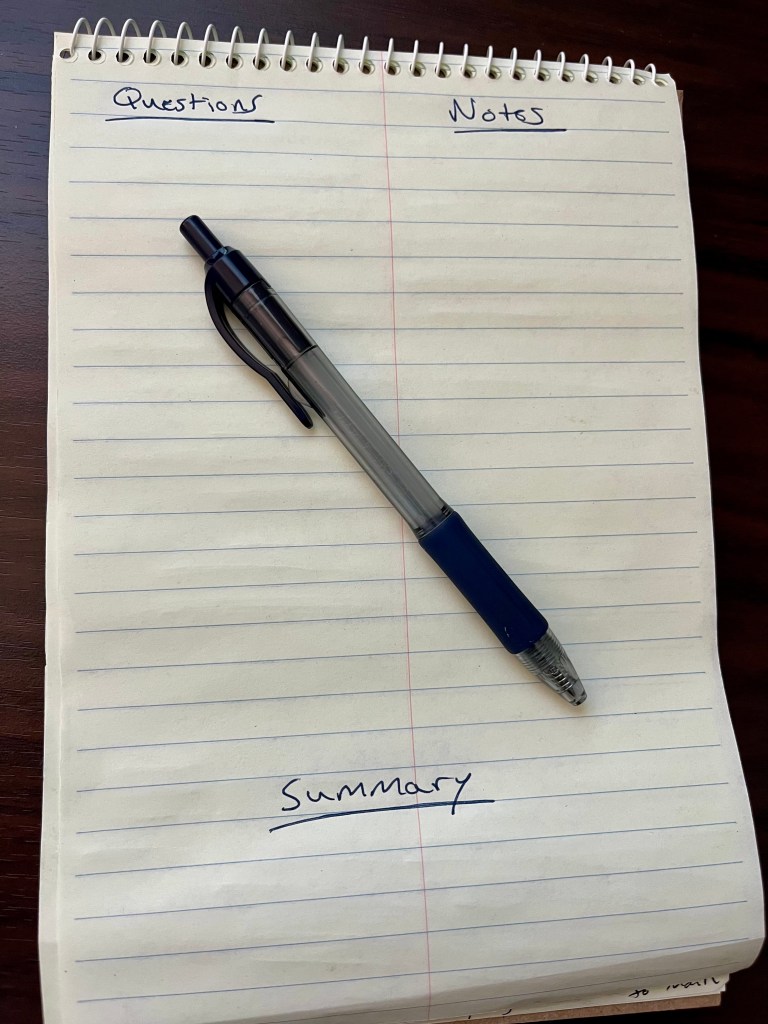
You’ll jot down your notes and questions in those sections during your meeting, but then, after taking a short break, come back to your notes and write down the important themes in your summary section.
I’ve found this simple strategy to be very helpful for engaging with various assignments, focusing in meetings, remembering important details from conversations, and prioritizing my to-do items within specific tasks.
Returning to work after stroke represents a major milestone in recovery for those who are able to do so.
With a little help from strategies like the Pomodoro and Cornell methods over the years, I’ve once again resumed all of my pre-stroke work responsibilities, like writing those newsletters, and some new assignments on top of that.

