Listen to this article
I often told people the first year of stroke recovery felt like my own personal quarantine.
Coming on the heels of the COVID-19 lockdowns, my stroke in May 2021 left me feeling like I was living through the early days of the pandemic all over again.
Stuck at home with little to do and nowhere to go on my own, I would often wait for my girlfriend to come home from work so she could drive us to the beach where I could practice walking with her support.
While at the beach, I would often walk backward for 10-15 minutes with her help guiding me through any beachgoers.
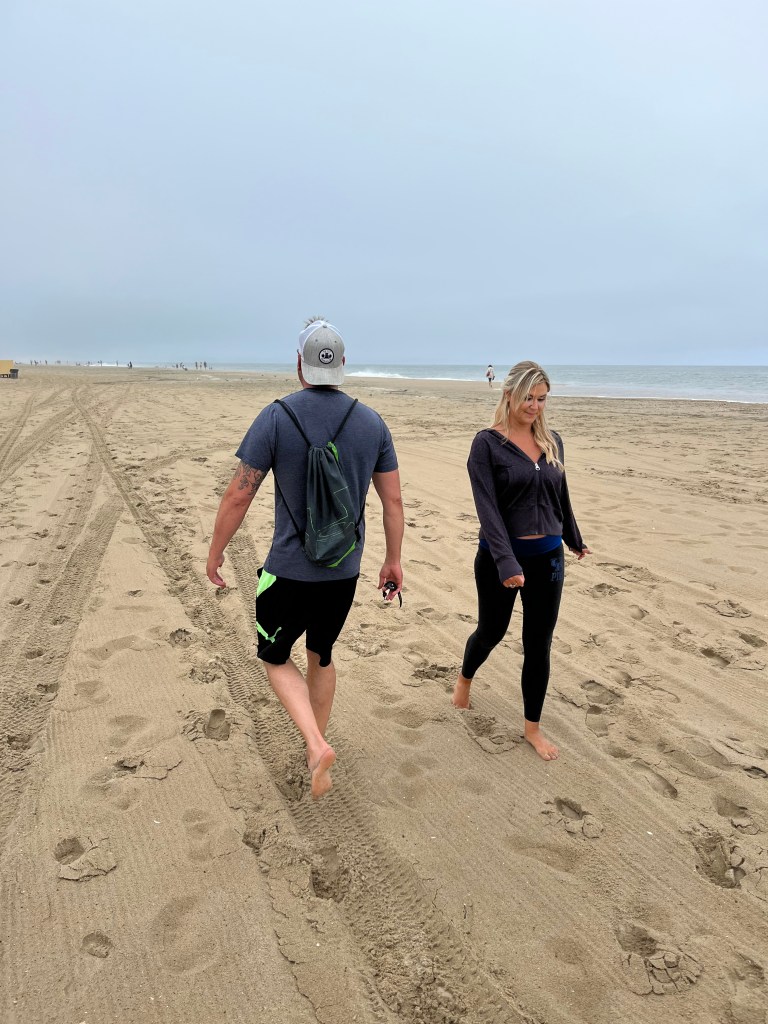
It was a super simple exercise that got me out of the house and provided a unique challenge that I felt was making a positive impact on my recovery during those very early weeks and months after stroke.
Now, years later, I’m relieved that I followed that simple routine so early in my recovery after stroke. In hindsight, I wish I had done it more often over these past few years!
How Walking Backward Can Help Stroke Survivors in Physical Therapy
Based on my experience, I wasn’t surprised to find that research indicates walking backward can have some promising impacts on stroke survivors.
Studies show that stroke survivors may benefit from walking backward in a variety of ways. There’s evidence that this practice can improve a stroke survivor’s balance and gait – a person’s manner of walking.
One study found that eight 30-minute sessions of backward walking produced greater improvements in walking speed — both forward and backward — for stroke survivors than did standard balance training.
Additionally, there may be neurological benefits to walking backward that go beyond the physical aspect of the exercise.
One study –that wasn’t focused on stroke survivors – found that when people walked backward they improved their performance on short-term memory tests.

4 Essential Stroke Recovery Strategies
Subscribe to the free monthly newsletter and I’ll send you a short article highlighting the four things I wish I’d started sooner after stroke.
Why I Started Walking Backward in Stroke Recovery
After leaving inpatient rehab, my stroke-affected left leg felt incredibly stiff around my ankle and I had a significant limp that made my walk look more like a hobble.
I would stretch my calves repeatedly but found little benefit in stretching.
However, as I’ve written about previously, I found the Knees Over Toes program to be helpful in training from home in the early months after stroke. The warm-up for that program is walking backward for about 10 minutes.
Encouraged by my early experiences with the program and desperate for any signs of improvement in my physical well-being in those early weeks after stroke, I started walking backward more often.
I’d regularly spend time walking backward with someone guiding me at the beach or a grassy area in the neighborhood. My hope was that walking backward might loosen up my stiff Achilles, ankle, and calf to make me look normal walking again.
Over time, I started to feel a rather significant difference after starting this practice, however, it was not for the reason I originally intended.
Walking backward alone didn’t loosen up my ankle as I had originally hoped. Instead, I noticed a pretty significant improvement in my overall balance and mobility.
For example, walking upstairs felt much more comfortable and I wasn’t as reliant on using the handrail.
In my experience, the cliché “The faster you can move backward, the faster you can move forward” was certainly true for me.
How to Add Walking Backward to Physical Therapy in Stroke Recovery
The beauty of walking backward is its simplicity. It’s a challenging exercise, but one you can do at your own pace.
When starting out, it will be necessary to have a friend or family member walking by your side and watching for any obstacles that may be behind you. It’s also best to practice on a soft surface like grass or sand instead of a parking lot should you fall.
For proper form, it’s important to make sure you’re pushing off through your big toe rather than shuffling backward as Ben Patrick explains in this video.
When it comes to timing, I started out with 10 minutes per session, which was the recommended warm-up in the Knees Over Toes program.
However, the study I cited earlier that highlighted benefits for stroke survivors had individuals walk backward anywhere from 10 to 30 minutes a day multiple times throughout the week.
As walking backward gets easier, you might also consider adding resistance to your workout. I’ve often had a friend hold a resistance band around my waist to make the exercise a little more challenging.
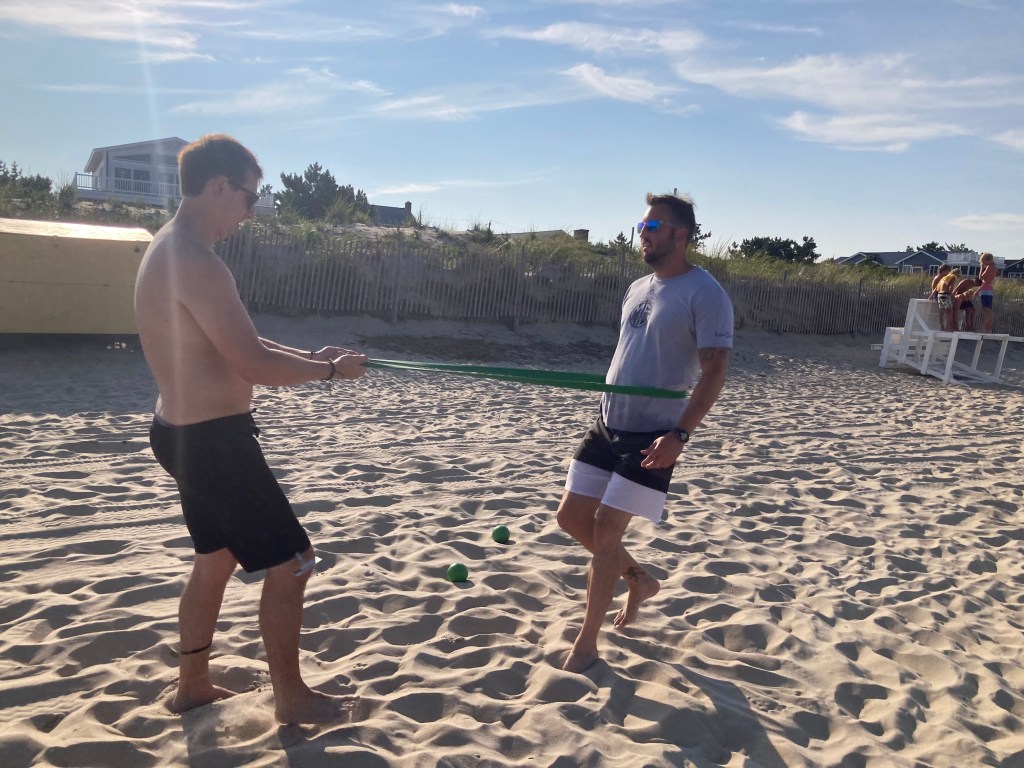
Reflecting on every exercise I’ve experimented with in stroke recovery, walking backward has been one of the simplest, yet most effective that I’ve found in my recovery.
I specifically noticed how it improved my balance, my confidence in walking again, and my speed walking forward. To this day, I’ll still drop it into my exercise routine once or twice a week and feel some noticeable improvements.


I find walking backwards to be very difficult since my stroke, but I’m definitely going to try it until I get better at it. Thanks for the advice!
LikeLiked by 1 person
I’m sorry I should have mentioned that I started out by holding onto someone’s arm/hand when we’d go for a walk. It’s certainly best to start slow, modify as needed, and progress at your own pace, but I hope you might find some benefit in this practice. Best of luck to you in recovery!
LikeLike
Thanks for this. I learned about walking backwards in my rehab. I do it in the hallway of my apartment building. There are lines in the carpet that help me go straight. It makes my neighbors laugh with me.
Betsy Q
LikeLiked by 1 person
Hey Betsy! I’ve definitely gotten some weird looks from people while I’m doing this as well LOL!
LikeLike