During my stay at inpatient rehab, a friend who was in the area stopped by my room to visit.
While we were talking, I joked with him that I was often so bored in the rehab center that I would just look out the window and watch the children playing in the yard across the street. Today, it looked like they were playing baseball.
He gave me a quizzical look and said there was no one out there. I pushed back and pointed to where they were, but he insisted there was no one playing baseball.
I reluctantly agreed because this wasn’t the first time during my hospital and rehab stay that I believed to see something that wasn’t there.
Hallucinations After Stroke
Research indicates that hallucinations are relatively frequent after stroke and stroke survivors with sleep disturbances or damage to the occipital lobe are more likely to experience them.
Unfortunately, sleep disturbances are common in hospital settings as nurses routinely check in on patients at all hours of the day.
Weeks before the comical exchange with my friend at the rehab center, I had another instance where I tried to convince my father that there was a young girl in the hospital room standing behind the chair he was sitting in.
Of course, there was no child in the room with us.
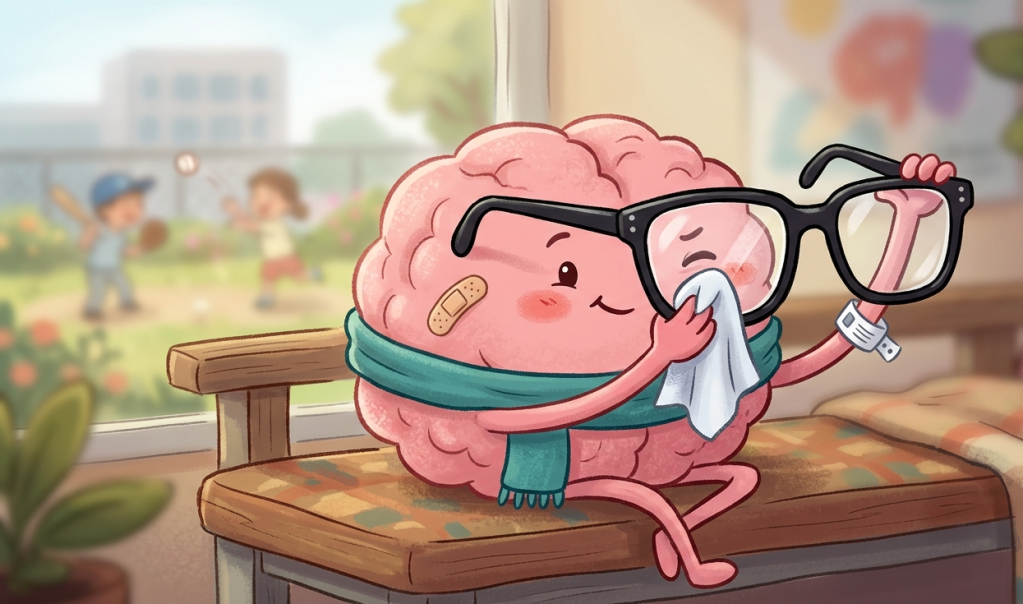
Some of the medication I was on at the time probably contributed to my confusion, but I was also reluctant to mention these events to anyone.
After weeks in the hospital and rehab center, I was desperate to go home. The last thing I felt I needed at the time was to tell doctors I was seeing non-existent children playing baseball across the street.
Vision Challenges After Stroke
After returning home from rehab, I continued to be surprised by challenges with my vision from struggles with extended screen time to sensory overload in public places.
As I’ve described in other posts, going back to work on a computer was a significant issue. To this day, an hour-long virtual meeting makes my eyes feel like they’re about to jump out of my head.
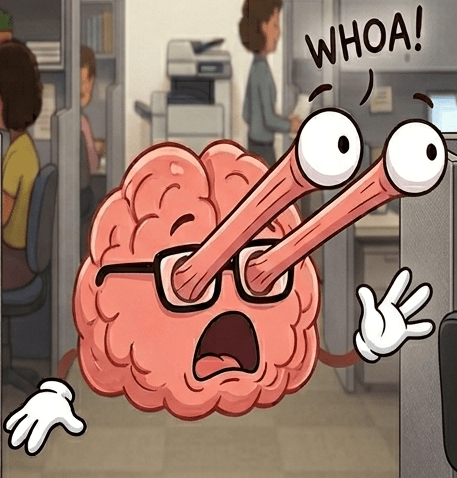
But even before I went back to work, simply being in crowded places was a challenge in the immediate months after stroke.
Sensory Overload After Stroke
About six to eight weeks after the stroke, my girlfriend and I visited the beach boardwalk and while I was walking without assistance at the time–rather, I was more accurately limping around–I found myself easily overwhelmed in crowded places.
On this day, I was sitting on a bench outside a coffee shop while my girlfriend was getting a drink. The boardwalk was packed that summer morning and as people walked by me, I could hear snippets of their conversations, but I couldn’t see them clearly.
Rather, I saw a blur of colors moving past me as the beachgoers and their vibrant bathing suits hurried past me.
If I stared at one person closely, I felt like I could make out their outfit, but being the loner on the boardwalk staring at girls in bikinis didn’t seem like a great idea.
Instead, I sat there experiencing the blur of colors and voices as I waited.
Although I had made significant physical progress to this point after stroke, the boardwalk experience was a reminder of how broken I felt. Despite being more independent and walking without assistance, I was still a step behind mentally.
Navigating Vision Challenges After Stroke
About 65% of stroke survivors will experience vision problems, according to the American Stroke Association.
As someone who has worn glasses most of my life, I’ve often discussed my stroke experience with my eye doctor over the years. Thankfully, my prescription hasn’t changed significantly, but visual fatigue has been an ongoing and unexpected challenge.
Like many other stroke-related deficits, my struggles with screen time and sensory overload in crowded places have gradually improved over time as I learned to work around these issues.
Specifically, I’ve learned to limit my screen time with shorter work bouts, which can help reduce visual fatigue.
Additionally, simply stepping outside for a moment and looking off into the distance has helped me reset when I start to feel a slight headache. This is a practice known as the 20-20-20 rule, which you’ve probably seen on a poster in your local optometrist office.
The 20-20-20 rule suggests you break up screen time every 20 minutes to look at something 20 feet away for at least 20 seconds. In general, being outside allows you to use your full field of vision, which can help reduce fatigue and stress.
Now years after stroke, I still struggle with flashing strobe lights – for example, at a concert or on a tv show. They can make me feel dizzy or make it difficult to fall asleep afterward.
It’s another reminder of how stroke recovery can be everything you never expected it to be. While you can make significant progress physically, some mental and visual challenges, such as sensitivity to strobe lights, can linger and affect you completely differently than they did pre-stroke.

