I remember the first time I heard about neuroplasticity after stroke.
It was during my very first outpatient physical therapy session when I was getting to know the therapists I’d be working with. At this point, I was about 4 to 5 weeks post-stroke, and I was desperate for any signs of physical improvement.
When the physical therapist mentioned how neuroplasticity could help me in recovery, I was instantly interested.
“Yes, neuroplasticity! Let’s do this long and fancy sounding word,” I probably thought to myself.
Unfortunately for me, neuroplasticity was not the quick fix that I had initially hoped for as I would learn in the years that followed.
What is Neuroplasticity?
Neuroplasticity is the brain’s ability to change itself in response to its experiences and environment. Should it face an injury, like a stroke, the brain can reorganize connections between neurons, which can help support efforts to regain some abilities affected by the stroke.
It was long believed that the brain stopped developing after childhood, but the concept of a brain and nervous system that adapted to its surroundings was first introduced by psychologist William James in the late 1800s.
Today, it’s largely accepted that the brain is flexible or plastic – meaning that it can reorganize connections between neurons and adapt to its environment.
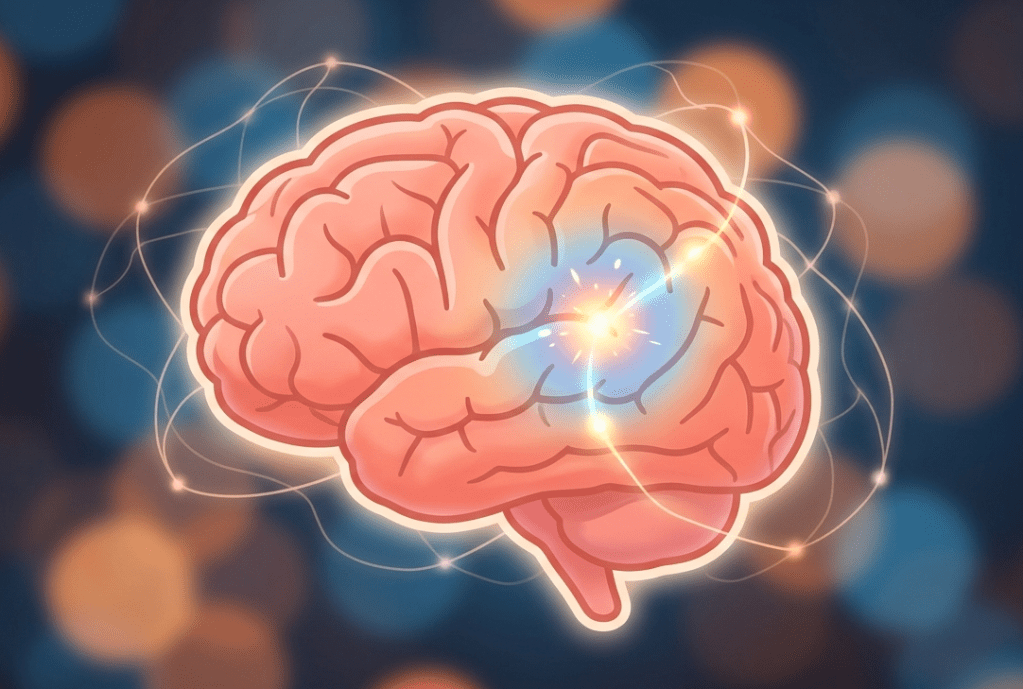
Most stroke survivors have probably heard a therapist say something like “neurons that fire together wire together” or “use it or lose it,” which describes how neuroplasticity works.
While neuroplasticity is not going to provide dramatic overnight improvements in recovery, it’s the brain’s mechanism that makes long-term and ongoing progress after stroke possible.
10 Things to Know About Neuroplasticity After Stroke
1) Recovering physical abilities through neuroplasticity is not quick
Neuroplasticity allows for the brain to change and reorganize connections between neurons to potentially improve physical abilities after a stroke, but improvements don’t always come quickly.
2) Repetition is critical
Kari Dahlgren explains why repetitive practice is important in her book Healing and Happiness After Stroke.
“Repetitive practice lets your brain know that there’s a problem that you really want to fix, and it will adapt to meet your needs. Then with lots of time and effort, your brain will rewire itself to regain more function and control,” she wrote.
3) Sleep supports neuroplasticity
For every rep and set we practice during the day, it’s during sleep when the brain reinforces and strengthens those neural connections.
Peter Levine describes this process in his book Stronger After Stroke. “What you learn while you’re awake (and this includes learning movement) is imprinted into the brain while you’re sleeping,” he wrote.
4) Difficult challenges can lead to neuroplastic change
Challenging situations can be seen as the entry point for neuroplasticity because the brain needs a reason to change.
Tommy Wood explains the importance of challenges for neuroplasticity in his book The Stimulated Mind. “The real magic of neuroplasticity happens when we fail at doing something we want to do. This creates a feeling of agitation or stress that tells our brain that some new processes and wiring need to be developed,” according to Wood.
5 ) Motivation is essential
Just as challenging situations can force us to change, our hobbies and passions can also drive neuroplasticity. If we’re motivated to accomplish something, we’ll be more likely to do so. Otherwise, the brain has little reason to change.
6) Neuroplasticity is ongoing
Neuroplasticity doesn’t end when the therapy sessions end. The brain is always changing and adapting to its environment and the information it receives.
7) Neuroplasticity isn’t just stroke-related
With neuroplasticity always ongoing, it’s not limited to recovery after stroke. Whatever we do frequently will change the brain.
8) Exercise may increase brain plasticity
Research indicates that exercise can increase brain-derived neurotrophic factor, or BDNF, which helps support neuroplasticity.
9) Mental practice can support neuroplasticity
When you visualize an activity, your brain activates many of the same neural pathways as if you were actually physically practicing, which makes mental practice a potentially helpful therapy option for stroke survivors.
10) Neuroplasticity isn’t always positive
Norman Doidge describes this as the plastic paradox in his book The Brain that Changes Itself. “When we learn a bad habit, it takes over a brain map, and each time we repeat it, it claims more control of that map and prevents the use of that space for ‘good’ habits,” he wrote.
How Neuroplasticity Can Help Stroke Survivors
Neuroplasticity is the brain’s way of adapting to change and recovering from an injury, like a stroke. However, it’s not a magical quick fix.
Neuroplasticity requires motivation to change and repetitive practice to cement that change.
Whether it’s an exercise in physical therapy or a mundane activity in your day-to-day life, the brain is constantly evolving and adapting to the information it receives.
That’s the essence of neuroplasticity. It provides hope for future improvements in recovery after stroke, but it’s up to the individual as to what change and habits they push their brain toward adopting.


I had my stroke in 2008, when neuroplasticity was really beginning to make itself known. I remember my neurologist teaching me to never give up. I was afraid. I thought I was going to end up like other family members who had suffered strokes.
My aphasia was bad, and I truly thought I would never find all those words I once had. But my neurologist kept repeating, “Never give up.” She had me trying different techniques and taught me that my brain could build new roads to get around what had been damaged. That was how she explained neuroplasticity to me.
At the time, I didn’t understand just how important those “new roads” would become in my life.
Neuroplasticity still fascinates me to this day. When I look back now, I realize my neurologist gave me something my family members who had strokes before me may not have had—the knowledge that my brain could keep finding new roads. What she taught me changed the direction of my life.
LikeLiked by 1 person
I agree, neuroplasticity is fascinating and the new roads analogy is wonderful. Thank you for sharing this!
LikeLiked by 1 person