By Blair Ames and Tricia DiGregorio
The fascinating story of the sea squirt is one you’ll find in many neuroscience books.
Sea squirts are small ocean creatures that swim around for the first phase of their life before latching onto a rock or reef where they remain for the rest of their lives.
The story of the sea squirt is a popular one because of what happens next. After the sea squirt has attached itself onto a permanent fixture, they eat their own brain.
It’s a startling conclusion, but the moral of the story is this: the brain can become expendable for some creatures if they don’t have to move.
For stroke survivors, the story signifies how important movement is for the brain.
Exercise Benefits for Stroke Survivors
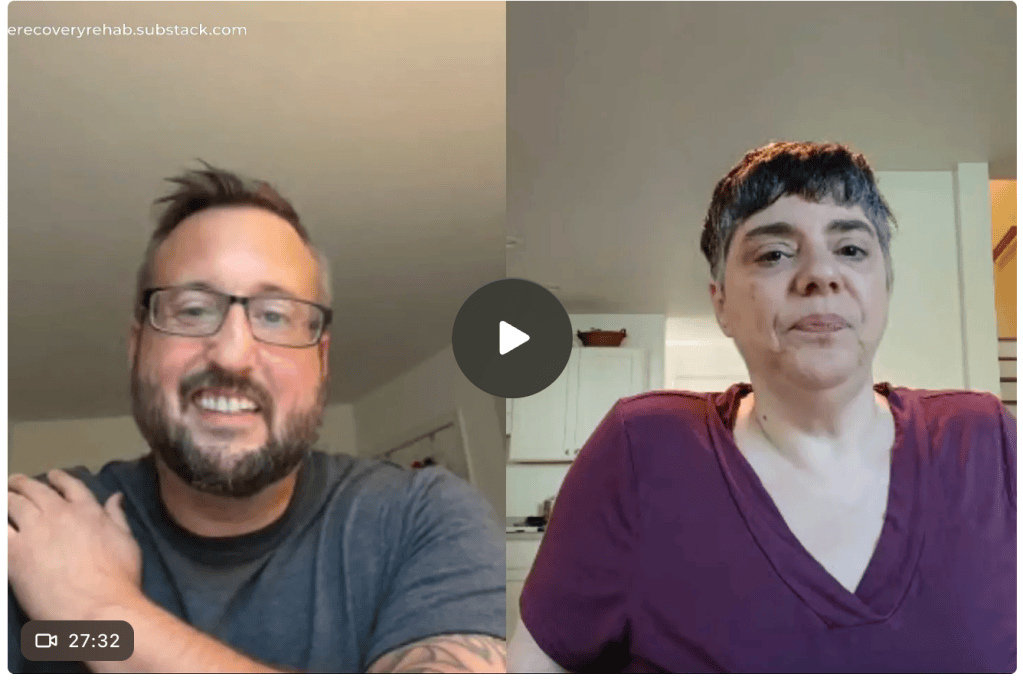
Tricia DiGregorio experienced an ischemic stroke in April 2023 when she woke up in the middle of the night and couldn’t move.
Tricia’s experiences that followed in post-stroke rehab were similar to mine.
After leaving inpatient rehab, Tricia attended outpatient physical therapy sessions where you get limited facetime with a therapist since they are juggling multiple clients at a time. Oftentimes, after a brief hello, you’re on your own to complete the same exercises each time you go in.
About two-and-a- half years after stroke, in November 2025, she started going to a new therapist with more intense one-on-one interaction, and that’s where Tricia said things turned around for her. She made more progress in the following nine months than she had in the two-and-a-half years prior.

“My therapist said we were going to work on functional movements, and I was in disbelief as to all the things she said we were going to try – things no therapist before had even suggested,” Tricia told me. “Weighted hinges, deadlifts, working heavy kettle bells, sit to stands, heel raises. Things I never thought I would be able to do – I’m now doing consistently. Today I’m able to step on and off curbs, jump, get up and down off the floor, and get down on my hands and knees.”
Along with a massive overhaul to her diet, Tricia said she’s lost 50 pounds and gained significant muscle after starting this new exercise program and she “feels better today than at any time in the past ten years.”
Tricia’s Advice for Others
Today, Tricia attends physical therapy only once a week, as time and finances permit, but she works out at home at least four days a week following the guidance from her therapist.
I asked Tricia for her advice to other stroke survivors who are seeking to improve their exercise habits after stroke, and here’s how she responded:
“This is going to sound trite, but never give up, and don’t listen to doctors who insist that progress happens only in the first six months post-stroke. I’m living proof that’s not the whole story.
Nerves take an inordinate amount of time to heal, and neuroplasticity requires attempting new, challenging– and sometimes even scary –things.
Remember, for a stroke survivor, that every new physical experience is also a brain exercise, so plan accordingly. Neuro-fatigue is real, but it lessens with time and repetition. As I was told way back in the early days of rehab, ‘This is your full-time job, now!’
Eat well, exercise, and rest often. Again, cliché, but clichés are that for a reason.”
How Exercise Impacts the Brain
Any form of exercise can prove to be helpful after stroke, but the old cliché in the gym world of “Don’t skip leg day” may carry extra weight.
Research suggests that training legs may be critical for the brain since leg strength has been associated with better cognitive function.
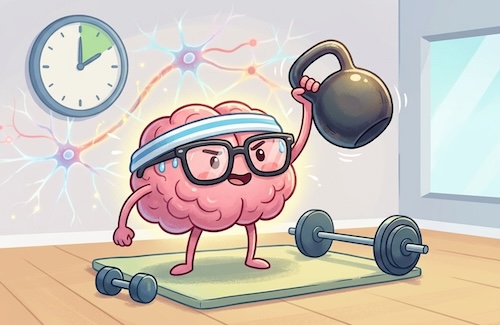
Beyond leg strength, research also indicates that exercise can improve decision-making. I know I always feel my best post-workout, but you don’t need an hour-long workout to feel these types of benefits.
Tommy Wood highlights the impact of short bursts of activity in his book The Stimulated Mind.
“Even very brief bursts of activity can improve brain function. Rounds of six seconds (yes, you read that right) of maximum effort cycling with one minute of rest immediately improves some measures of focus and concentration,” Wood wrote.
Finding the Right Exercises After Stroke
Exercising after stroke is a frustrating paradox.
Stroke survivor resources emphasize the importance of exercise, but it’s discouraging to try lifting weights or running when you can hardly move one side of your body.
However, once you find routines that really resonate with you – especially ones you can do at home or outside – you’ll find exercise can have a profound impact on your recovery after stroke.
Like Tricia, it took me time to figure out the best exercises for my post-stroke self, but constantly experimenting with new options is what helped me to continue improving my physical abilities in the years after stroke.

